“No man shall have for himself particular gods of his own; no man shall worship by himself any new or foreign gods, unless they are recognized by the public laws.”—Cicero.
The Great Empires of Prophecy, from Babylon to the Fall of Rome (GEP), by A. T. Jones, 348.4
What are the limits of civil authority from the standpoint of natural right and divine authority?
I pondered these questions while doing my devotion and thinking about things taking place in this world in which we live. Many changes have taken place within the past few years which have given rise to startling trends in behavior from those who are voted to govern to those who cannot govern themselves.
With the examination of these trends, are we going back to a time in history that we found so oppressive and antihuman that we have buried it so deep to have forgotten the lessons learnt? To the extent that, having forgotten, we are now reverting to the same behaviors that were then abhorrent.
What do you think? Let me share an excerpt from a book that I read. The Limits of Civil Authority (LCA) by A. T. Jones.
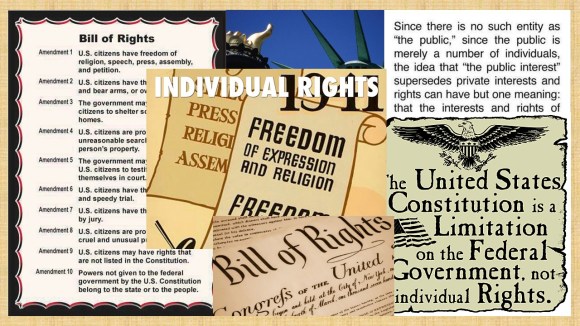
THERE seems to be in this country at the present time an urgent need of a better understanding by the public, upon the subject of the boundaries of the domain of popular government; for there are indications of an ignorance upon this point which cannot fail to be attended with grave wrongs to individuals and evils to the State. The principle that “the majority must rule,” is the correct one, but is not of universal application. There is danger that it may be extended altogether too far; for it must be evident to all, that the majority cannot prescribe rules for the minority in everything, no matter how small that minority may be. If it can, there is no such thing as individual rights, for that which is subject to the will of a majority is not a right. A right is something which, in its very nature, is inherent in the one possessing it, independent of the will of all other persons. Otherwise it would be but a mere privilege, such as a superior might grant to an inferior, and take away again at his pleasure; and the saying would be true that “might makes right.” But it is one of the fundamental principles of our government, that “all men are created equal.” It is not the prerogative of any one to be lord over any other, to prescribe rules by which he must live. They are equal in this, that all have an equal right to think and act as suits their inclinations. But this right is limited by the fact that all are equal, which forbids each to do anything that would encroach upon the rights of his neighbor. For that which would interfere with the rights of others is not a right. Rights cannot conflict. Rights run in parallel lines, never crossing, never clashing. LCA 1.1
All individuals have rights. The Declaration of Independence declares that “all men are created equal,” “and are endowed by their Creator with certain unalienable rights;” that among these are “life, liberty, and the pursuit of happiness;” and the same great truths are embodied in the fundamental principles of English and American law. (See Cooley’s Edition of Blackstone’s Commentaries, book 1) and these rights are a necessary consequence of the fact that all men are created equal. This fact gives to each one equal authority, and leaves no one with any natural authority over and above another. No man gets his rights and liberties from his fellows, but from his Creator, who, as the Declaration of Independence says, endowed him with them; and therefore only his Creator can rightfully take them away. Otherwise than this, he can be deprived of them only by forfeiture for misconduct. LCA 2.1
The purpose of governments, as the Declaration of Independence asserts, is to protect these rights,—the rights of the individual. Governments are not instituted merely to run themselves, to become rich and great and powerful at the expense of the individuals composing them, and to perpetuate themselves regardless of the wishes of the governed; but to protect each individual in the enjoyment of his rights. The individual could not well protect himself against all others, so each delegates his right in this respect to certain ones chosen to make laws and preserve peace and order, and who are backed up by the power of the people who choose them. This is what constitutes government in its republican form,—the delegation of the power and authority of the people, the individuals, to their representatives. And this is done, directly or indirectly, by means of an election, in which each individual has an equal voice. The people do the governing, and those chosen to office are but the servants of the people, to carry out their will, and not in any sense rulers over them. LCA 2.2
Governments should, therefore, exercise themselves in doing what they are instituted to do; viz., protect the people in the enjoyment of their rights; and outside of this they have no legitimate authority whatever; for governments, in their popular form, are but the expression of the will of the majority. The majority can and must rule in the sphere which governments are instituted to fill, in prescribing the manner in which the purpose of the government—the protection and preservation of individual rights—shall be carried out, whether that government be municipal, State, or national. Beyond this the majority has no right to go. And let it be remembered that while popular governments represent the will of the majority, they are instituted to protect the rights of the minority,—the individual. The moment therefore that the government undertakes to regulate an individual’s conduct in matters which do not concern the rights of others, it begins to do just the opposite of that which it was instituted to do, since it begins to invade, not protect, the rights of the minority. LCA 3.1
When, therefore, we hear it said that Mr. A. or Mr. B. must stop doing as he does, because in this country the majority must rule, it is proper to stop and inquire whether his conduct pertains to that upon which the majority have the right to speak. If his conduct is an infringement upon the rights of his neighbors, if it is an infringement of the will of the majority in that which concerns the equal rights of all citizens, it must be regulated by their will. But if not, the individual is within the sphere of his own rights and liberties, so far, at least, as his fellow-men are concerned, and no one has the right to molest him, however foolish or unwise his conduct may appear to others. He is outside the lines which mark the limitations of majority rule. LCA 3.2
But there are other considerations that enter into this question. Man’s first and highest allegiance in all things is due to his Creator; therefore the domain of conscience is one which human government, whether of one or of many, has no right to invade. No man can surrender his conscience to the keeping of another, and maintain his loyalty to God; but as a responsible moral being, he must remain loyal to his Creator at whatever cost, even at the sacrifice of life itself. In such cases the word of the Lord is: “Whosoever will save his life shall lose it; and whosoever will lose his life for my sake shall find it.” Matthew 16:25 God’s word is, “Thou shalt not go with the multitude to do evil.” This places every man on his own responsibility, and shows that a question of duty toward God, a question of conscience, is a question with which majorities and minorities have nothing to do. LCA 4.1
The first and great commandment in the divine law is supreme love to God. The test of love is obedience: “If ye love me,” says the Saviour, “keep my commandments.” John 14:15 And again we are told in the divine word that “by this we know that we love the children of God, when we love God and keep his commandments. For this is the love of God, that we keep his commandments.” 1 John 5:2, 3. Hence, the commandment to love God is in effect a command that we obey him. And this the divine law says alike to every man. “We know,” says the apostle, “that what things soever the law saith, it saith to them who are under the law; that every mouth may be stopped, and all the world may become guilty before God.” Romans 3:19 LCA 4.2
But while God demands man’s first and best affections, he throws the safeguards of his law around his creatures, and to each moral being he says, “Thou shalt love thy neighbor as thyself.” Matthew 22:39 But at an early period in the history of the race, man rebelled against the law of his Creator. The divine injunction of equal love for fellow-creatures no longer afforded the protection necessary, and so God ordained that men should organize for the protection and securing of their own natural rights. This we call civil government. But this in no way supersedes the divine government; it does not in any measure release the individual from obligation to obey the divine law. It simply provides a way whereby men may compel their fellows to yield to them that which is their due. LCA 5.1
Notwithstanding the ordinance of civil government, God is still the great moral Governor; to him every soul is responsible; to him every free moral agent must give account. To permit any power whatever to come between the individual and God, would destroy individual responsibility toward God. if it were the province of the State to enforce the law of God, the individual would naturally seek to know not the will of God but the will of the State. The effect would be to put the State in the place of God, just as the papacy puts the pope in the place of God. On the other hand, had God not committed to man the conservation of his own natural rights, one of two things would have happened; either vengeance for transgression against human rights would have been so swift and certain as to defeat the very object of God in making and in leaving man free to choose or refuse his service, or else punishment would have been so long delayed as to afford no protection to those in need of it. Civil government as it exists is an absolute necessity for a race of social free moral agents, in a state of alienation from their Creator. LCA 5.2
It is evident from the facts stated that there never can be any conflict between legitimate civil authority and the claims of the divine law. And yet the fact remains that there have been many and serious conflicts. Civil governments have frequently required of their subjects that which the divine law forbids, and have forbidden that which the divine law requires. Why is this? The answer is that those in power have either willfully or ignorantly exceeded their legitimate authority. Were this not true, it would have been the duty of Shadrach, Meshach, and Abednego to have fallen down and worshiped the great image set up by Nebuchadnezzar in the plain of Dura, and God would not have delivered them out of the furnace into which they were cast. It would likewise have been Daniel’s duty to have refrained from asking any petition of any God or man for thirty days, save of the king only, when so commanded by his earthly sovereign; and God would not have sent an angel and closed the mouths of the lions into whose den he was cast for his disregard of civil authority. But God did deliver Shadrach, Meshach, and Abednego, and he did vindicate Daniel’s course, thus declaring in an unmistakable manner, and in thunder tones, that he alone is Sovereign of the conscience, that to him alone is unqualified allegiance due, and that he alone is the moral Governor of the universe. LCA 6.1
Nor are these instances cited isolated cases in which the devoted servants of God have, in the face of death, chosen to obey God rather than men. The Bible and the history of the Christian Church are full of such cases. This principle was well understood and was fearlessly announced by the apostles who had received it from the Lord himself, couched in these matchless words, “Render unto Cesar the things which are Cesar’s, and unto God the things that are God’s.” Matthew 22:21 And when commanded by the civil rulers to refrain from doing something which Jesus had commanded, “Peter and John answered and said unto them, whether it be right in the sight of God to hearken unto you more than unto God, judge ye. For we cannot but speak the things which we have seen and heard.” And again, Peter and the other apostles answered and said, “We ought to obey God rather than men.” Acts 4:19 Such must be the Christian’s answer to-day to any and every demand that conscience be subordinated to civil authority. The Christian can go to prison or to death, but he cannot disobey God even at the behest of the greatest of civil powers. His invariable answer must be, “We ought to obey God rather than men.”
This excerpt gives much food for thought, but you cannot deny the truth or common sense of it.
I will end with a quote that I used in a previous blog post over a year ago, but is so applicable to this discussion. It was written by Thomas Jefferson, who was the third President of the USA.
Here is the statement:
“The spirit of the times may alter, will alter. Our rulers will become corrupt, our people careless. A single zealot may commence persecution, and better men be his victims. It can never be too often repeated, that the time for fixing every essential right on a legal basis is while our rulers are honest, and ourselves united. From the conclusion of this war we shall be going downhill. It will not be necessary then to resort every moment to the people for support. They will be forgotten, therefore, and their rights disregarded. They will forget themselves, but in the sole faculty of making money, and will never think of uniting to effect a due respect for their rights. The shackles, therefore, which shall not be knocked off at the conclusion of this war, will remain on us long, will be made heavier and heavier, till our rights shall revive or expire in a convulsion.”
Thomas Jefferson, Notes on Virginia, Query XV11. In American State Papers page 101.
 cryaloud.news