Categories
Bible Truths

God of the Old Testament – Part Two

We have established that Christ is the law giver.  It is clear that most of the references of God in the Old Testament is actually speaking of Christ.  Nevertheless, the scripture is clear “To wit, that God was in Christ, reconciling the world unto himself, not imputing their trespasses unto them; and hath committed unto us the word of reconciliation”. (2 Corinthians 5:19 [KJV]).
The book of Hebrews states of Christ, “ Who being the brightness of [his] glory, and the express image of his person, and upholding all things by the word of his power, when he had by himself purged our sins, sat down on the right hand of the Majesty on high”. (Hebrews 1:3 [KJV])

(John 10:30 [KJV])“I and [my] Father are one”.  
He Christ is the exact nature and character of his father.  Speaking of His father he states, Then answered Jesus and said unto them, Verily, verily, I say unto you, The Son can do nothing of himself, but what he seeth the Father do: for what things soever he doeth, these also doeth the Son likewise. (John 5:19 [KJV])

We will address these difficult statements in a moment.

God made man upright and gave him a divine nature. In sinning, he lost the divine nature, and became Carnal.  The result is, mankind could no longer walk in the way of the Lord.  Why? Simply put, “Because the carnal mind [is] enmity against God: for it is not subject to the law of God, neither indeed can be”. (Romans 8:7 [KJV])
Therefore, every command given to carnal man is given in light of his condition.  A carnal heart will never accept or practice divine things. Everything divine is contrary to that nature.
Being not subjected to the divine law, how must God work with sinful man?  To reach sinful humanity, Christ condescended, and started working with mankind in the exact condition and place where he (mankind) was.  The goal was to recover man so that it could be said, “Let this mind be in you, which was also in Christ Jesus”. (Philippians 2:5 [KJV])
Having lost the divine mind, mankind was now governed by his feelings.  The scripture calls it, “the flesh”. 

And the LORD said, My spirit shall not always strive with man, for that he also [is] flesh: yet his days shall be an hundred and twenty years. (Genesis 6:3 [KJV])

For when we were in the flesh, the motions of sins, which were by the law, did work in our members to bring forth fruit unto death. (Romans 7:5 [KJV])

I thank God through Jesus Christ our Lord. So then with the mind I myself serve the law of God; but with the flesh the law of sin. (Romans 7:25 [KJV])

[There is] therefore now no condemnation to them which are in Christ Jesus, who walk not after the flesh, but after the Spirit. (Romans 8:1 [KJV])

For what the law could not do, in that it was weak through the flesh, God sending his own Son in the likeness of sinful flesh, and for sin, condemned sin in the flesh: (Romans 8:3 [KJV])

That the righteousness of the law might be fulfilled in us, who walk not after the flesh, but after the Spirit. (Romans 8:4 [KJV])

So then they that are in the flesh cannot please God. (Romans 8:8 [KJV])

But ye are not in the flesh, but in the Spirit, if so be that the Spirit of God dwell in you. Now if any man have not the Spirit of Christ, he is none of his. (Romans 8:9 [KJV])

That is, They which are the children of the flesh, these [are] not the children of God: but the children of the promise are counted for the seed. (Romans 9:8 [KJV])

For it is written, that Abraham had two sons, the one by a bondmaid, the other by a freewoman. (Galatians 4:22 [KJV])

But he [who was] of the bondwoman was born after the flesh; but he of the freewoman [was] by promise. (Galatians 4:23 [KJV])

[This] I say then, Walk in the Spirit, and ye shall not fulfil the lust of the flesh. (Galatians 5:16 [KJV])

For the flesh lusteth against the Spirit, and the Spirit against the flesh: and these are contrary the one to the other: so that ye cannot do the things that ye would. (Galatians 5:17 [KJV])

Sinful humanity is governed by feeling, and therefore is more animalistic.  The entire Bible is full of examples of the depravity of man.  We will cite two or three examples to establish the word.  Example: Cain and Able.  Cain felt slighted and murdered his brother and immediately lied about it. (Genesis 4:8-9)Example: Joseph and his brothers. (Genesis 38), and Example: Israel leaving Egypt and their subsequence entrance in the promise land.  We are told that it was never God’s will that Israel gained the land by warfare.  Gaining the land by warfare required killing and stealing and the breaking of all the commandments.  But this is all the carnal heart knows.  Christ was not a law breaker.

For, brethren, ye have been called unto liberty; only [use] not liberty for an occasion to the flesh, but by love serve one another. (Galatians 5:13 [KJV])

For all the law is fulfilled in one word, [even] in this; Thou shalt love thy neighbour as thyself.
But if ye bite and devour one another, take heed that ye be not consumed one of another. (Galatians 5: 14, 15 [KJV])

God was well aware that Israel had no power to deliver themselves.  He worked patiently with them in the wilderness to develop faith in Him as the life giver and preserver.  Many never learnt the lessons. With all of His goodness displayed, it should have opened their understanding and lead them to repentance. (See Romans 2:4) Sadly, they continued to live by feelings. Since they all had free will, God’s only option to work with them was in their deluded state. Due to Israel living in the flesh then, the commands were given to them in the flesh, because we have concluded they would not or could not obey divine law in their carnal state. 

The law of the flesh reigns until the mind sees the divine.  It is by such that the commands must be viewed. For example: 
“Eye for eye, tooth for tooth, hand for hand, foot for foot”,
“Burning for burning, wound for wound, stripe for stripe”.  (Exodus 21: 24, 25 [KJV])

This is living in the flesh.   Notice Christ’s response to the above statements;

“Ye have heard that it hath been said, An eye for an eye, and a tooth for a tooth:
But I say unto you, That ye resist not evil: but whosoever shall smite thee on thy right cheek, turn to him the other also.
And if any man will sue thee at the law, and take away thy coat, let him have [thy] cloke also.
And whosoever shall compel thee to go a mile, go with him twain.
Give to him that asketh thee, and from him that would borrow of thee turn not thou away”
.  
(Matthew 5: 38-42 [KJV])

Only as the Divine mind is restored in man can the individual do this.  No carnal heart could ever contemplate these commands much less perform them.

Categories
Bible Truths

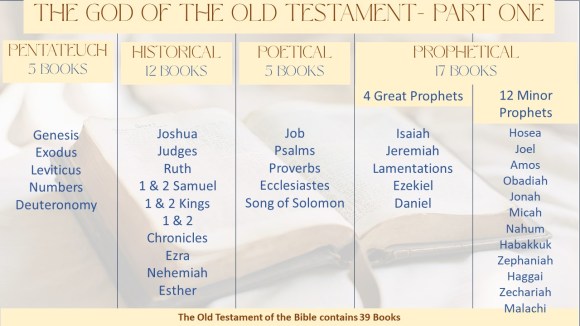
The God of the Old Testament – Pt 1

For many Christians, the Old Testament is an enigma. The God represented therein is stern and oppressive. The language is hard and the commands, at times, seem brutal. We will cite a few examples. These are in no wise a comprehensive list,  nor is intended to be.  Here are a few statements with which people have difficulty. “(Numbers 15:32-36 [KJV])

And while the children of Israel were in the wilderness, they found a man that gathered sticks upon the sabbath day. And they that found him gathering sticks brought him unto Moses and Aaron, and unto all the congregation.  And they put him in ward, because it was not declared what should be done to him.  And the LORD said unto Moses, The man shall be surely put to death: all the congregation shall stone him with stones without the camp.  And all the congregation brought him without the camp, and stoned him with stones, and he died; as the LORD commanded Moses.

(Deuteronomy 21:18=21 [KJV])
If a man have a stubborn and rebellious son, which will not obey the voice of his father, or the voice of his mother, and [that], when they have chastened him, will not hearken unto them:
Then shall his father and his mother lay hold on him, and bring him out unto the elders of his city, and unto the gate of his place; And they shall say unto the elders of his city, This our son [is] stubborn and rebellious, he will not obey our voice; [he is] a glutton, and a drunkard.
And all the men of his city shall stone him with stones, that he die: so shalt thou put evil away from among you; and all Israel shall hear, and fear.

(Leviticus 20:9-10 [KJV])
For every one that curseth his father or his mother shall be surely put to death: he hath cursed his father or his mother; his blood [shall be] upon him. And the man that committeth adultery with [another] man’s wife, [even he] that committeth adultery with his neighbour’s wife, the adulterer and the adulteress shall surely be put to death.

(Leviticus 20:11-12 [KJV])
And the man that lieth with his father’s wife hath uncovered his father’s nakedness: both of them shall surely be put to death; their blood [shall be] upon them. And if a man lie with his daughter in law, both of them shall surely be put to death: they have wrought confusion; their blood [shall be] upon them.

(Leviticus 20:13-14 [KJV])
If a man also lie with mankind, as he lieth with a woman, both of them have committed an abomination: they shall surely be put to death; their blood [shall be] upon them. And if a man take a wife and her mother, it [is] wickedness: they shall be burnt with fire, both he and they; that there be no wickedness among you.

(Leviticus 20:15-16 [KJV])
And if a man lie with a beast, he shall surely be put to death: and ye shall slay the beast.
And if a woman approach unto any beast, and lie down thereto, thou shalt kill the woman, and the beast: they shall surely be put to death; their blood [shall be] upon them.

Recently, Israel Prime Minister, Benjamin Netanyahu quoted the passage from First Samuel chapter 15.
(1Samuel 15:2 [KJV])
Thus saith the LORD of hosts, I remember [that] which Amalek did to Israel, how he laid [wait] for him in the way, when he came up from Egypt. Now go and smite Amalek, and utterly destroy all that they have, and spare them not; but slay both man and woman, infant and suckling, ox and sheep, camel and ass.
Reading these verses paint a picture of an extreme God who seems to delight in death. Yet it is evident that the Christ of the New Testament is of an entirely different character.
I remember watching a debate with Sam Harris and Rick Warren, and Rick quoted 1 John 4:8
“God is love,” to which Sam asked what was lovely about Tuberculosis and other sclerosing diseases. To which Rick Warren could give no reasonable answer.

Lee Strobel In his book The Case for Faith, chronicled the story of Charles Templeton, a mighty evangelist who gave up on the Christian faith. This man is considered the father of mass evangelism, for he would fill stadiums by his preaching. In fact, the Rev Billy Graham would frequently travel with him.

As Lee Strobel interviewed Charles Templeton, he asked the question, why he (Templeton) rejected Christianity and the God of Christianity? Templeton responded, it was a photograph.  A photograph from Life Magazine of a black woman in Northern Africa holding a dead baby in her arms and looking up to heaven.  He stated that the country was experiencing a devastating drought and all she needed was a little rain. “I looked at it and I thought, “is it possible to believe that there is a loving or caring creator when all this woman needed was rain?”  “How could a loving God do this to that woman? Who runs the rain? I don’t, you don’t.  He does – or that’s what I thought.  But when I saw that photograph, I immediately knew it is not possible for this to happen and for there to be a loving God. There was no way. Who else but a fiend could destroy a baby and virtually kill its mother with agony – when all that was needed was rain?”

In a civil moral society, the above statements are difficult to accept or understand. Therefore, many have rejected the Bible and most Christians have reached the conclusion that segments of the Bible cannot be accepted. In spite of these difficulties, we know that God is loving and merciful.   For most Christians, the attribute demonstrated by Christ in the New Testament are wonderful, yet it was the same Christ in the Old Testament.

(Hebrews 13:8 [KJV])
Jesus Christ the same yesterday, and today, and forever.

(Malachi 3:6 [KJV])
For I [am] the LORD, I change not; therefore ye sons of Jacob are not consumed.

(John 5:46 [KJV])
For had ye believed Moses, ye would have believed me: for he wrote of me.

(Hebrews 3:8-11 [KJV])
Harden not your hearts, as in the provocation, in the day of temptation in the wilderness:

When your fathers tempted me, proved me, and saw my works forty years. Wherefore I was grieved with that generation, and said, They do alway err in [their] heart; and they have not known my ways. So I sware in my wrath, They shall not enter into my rest.)

(1 Corinthians 10:1-4 [KJV])
Moreover, brethren, I would not that ye should be ignorant, how that all our fathers were under the cloud, and all passed through the sea;  And were all baptized unto Moses in the cloud and in the sea;  And did all eat the same spiritual meat; And did all drink the same spiritual drink: for they drank of that spiritual Rock that followed them: and that Rock was Christ.

(1 Corinthians 10:9 [KJV])
Neither let us tempt Christ, as some of them also tempted, and were destroyed of serpents.

(Isaiah 33:22 [KJV])
For the LORD [is] our judge, the LORD [is] our lawgiver, the LORD [is] our king; he will save us.

(James 4:12 [KJV])
There is one lawgiver, who is able to save and to destroy: who art thou that judgest another?
Christ is the lawgiver, the one represented as the protector and savior of mankind throughout the Old Testament.  He is the lamb slain from the foundation of the world, and John the Baptist speaking of Him, says, “behold the lamb of God which taketh away the sins of the world.”

(Isaiah 63:9 [KJV])
In all their affliction he was afflicted, and the angel of his presence saved them: in his love and in his pity he redeemed them; and he bare them, and carried them all the days of old.

All those difficult statements in the Old Testament were directed by Christ. Is He inconsistent? We have already quoted that Christ changes not, He is also omniscient, knowing all things. How should we relate to those questions? In the case with Charles Templeton, the inability to find a reasonable answer led him to reject Christianity and God. I firmly believe that there are no inconsistencies with God, therefore the answers are found in the word, The Holy Bible.

To be continued… Watch out for Part Two.

Categories
Bible Truths

Misinterpretation Leads to Disappointment

“Study to shew thyself approved unto God, a workman that needeth not to be ashamed, rightly dividing the word of truth.” (2 Timothy 2:15 [KJV])

“Jesus answered and said unto them, Ye do err, not knowing the scriptures, nor the power of God.” (Matthew 22:29 [KJV])

“Wherefore I was grieved with that generation, and said, They do alway err in [their] heart; and they have not known my ways.” (Hebrews 3:10 [KJV])

These scripture reference points introduce an issue that always arises among believers. Reading the scriptures but applying our faulty understanding and yet insisting that others yield to our understanding.  The Spirit of the Lord has declared that must not be so.

“Thus saith the LORD; Cursed [be] the man that trusteth in man, and maketh flesh his arm, and whose heart departeth from the LORD.” (Jeremiah 17:5 [KJV])

“Trust in the LORD with all thine heart; and lean not unto thine own understanding. In all thy ways acknowledge him, and he shall direct thy paths.  Be not wise in thine own eyes: fear the LORD, and depart from evil.” (Proverbs 3:5-7 [KJV])

 “O LORD, I know that the way of man [is] not in himself: [it is] not in man that walketh to direct his steps.” (Jeremiah 10:23 [KJV])

“After this He went down to Capernaum, He, and His mother, and His brethren, and His disciples: and they continued there not many days. And the Jews’ Passover was at hand, and Jesus went up to Jerusalem.”  {John 2:12}, {Desire of Ages (DA) 154.1}  
In this journey, Jesus joined one of the large companies that were making their way to the capital. He had not yet publicly announced His mission, and He mingled unnoticed with the throng. Upon these occasions, the coming of the Messiah, to which such prominence had been given by the ministry of John, was often the theme of conversation. The hope of national greatness was dwelt upon with kindling enthusiasm. Jesus knew that this hope was to be disappointed, for it was founded on a misinterpretation of the Scriptures. With deep earnestness He explained the prophecies, and tried to arouse the people to a closer study of God’s word.  {DA 154.2}  

As I write, there is a great conflict going on between Israel and the Palestinians.  The term “from the river to sea” is often used, with the intention of violence with its usage.  Truly, God spoke these words to Abraham in Genesis 15.

(Genesis 15:17-18 [KJV])
“And it came to pass, that, when the sun went down, and it was dark, behold a smoking furnace, and a burning lamp that passed between those pieces.  In the same day the LORD made a covenant with Abram, saying, Unto thy seed have I given this land, from the river of Egypt unto the great river, the river Euphrates.”

 The question to ask is what did Abraham understand by this?. The promise was twofold.  If Abraham and his seed would remain faithful to the Lord, then the Lord would grant them this land.  However, faithfulness was lacking on the part of Abraham’s children.  The consequences of this was, all the great powers that rule over Israel actually controlled from the river to the sea.

 In 2 Kings 24, we see both Egypt and Babylon had dominion over that particular area. 

(2 Kings 24:7 [KJV])
And the king of Egypt came not again any more out of his land: for the king of Babylon had taken from the river of Egypt unto the river Euphrates all that pertained to the king of Egypt.

AT Jones in his booklet “Christian Patriotism (CHPA)” shares Abraham’s understanding of the promise. Please consider his argument.

When God said to Abraham, “Get thee out of thy country, and from thy kindred, and from thy father’s house, unto a land that I will show thee,” Abraham “went out, not knowing whither he went.” Hebrews 11:8. {1900 ATJ, CHPA 18.1}

God had not yet shown to him the land or country into which he was to go, and which was to be his. So far, the Lord had only promised to show it to him. {1900 ATJ, CHPA 18.2}

There were three things, however, which Abraham must do before he could fairly expect God to show him the country which He had promised, and which was to be his. First, he was to get out of his country; secondly, from his kindred; thirdly, from his father’s house. {1900 ATJ, CHPA 18.3}

He left his country; but when he did so, his father and his kindred went with him to Haran, and dwelt there. There his father died; and now, separated from his father’s house, he went on to the land of Canaan. {1900 ATJ, CHPA 18.4}

But there accompanied him yet one of his kindred– Lot, his brother’s son. While Lot was with him, and he was thus not separated from his kindred, though separated from his country and his father’s house, the time did not come for God to show to him the land, nor the country which He would give him. {1900 ATJ, CHPA 18.5}

But there came a day when Lot should be separated from him. Lot chose all the plain of the Jordan, and journeyed east, and “they separated thus, one from the other.” Genesis 13:11. {1900 ATJ, CHPA 19.1}

And just then it was that God showed Abraham the land which He had promised to show him, the country which should be his. “And the Lord said unto Abraham, after that Lot was separated from him, Lift up now thine eyes, and look from the place where thou art northward, and southward, and eastward, and westward; for all the land which thou seest, to thee will I give it, and to thy seed forever.” Genesis 13:14, 15. {1900 ATJ, CHPA 19.2}

And the country which the Lord then showed to Abraham, and which He there promised him should be his for an everlasting possession–that country embraced the world; for “the promise, that he should be the heir of the world, was not to Abraham, or to his seed, through the law, but through the righteousness of faith.” Romans 4:13. {1900 ATJ, CHPA 19.3}

Therefore, when at the word of the Lord Abraham lifted up his eyes to see what the Lord would show him, he saw “the world to come,” which is to be the everlasting possession of all them which be of faith. For “if ye be Christ’s, then are ye Abraham’s seed, and heirs according to the promise.” Galatians 3:29. {1900 ATJ, CHPA 19.4}

And from that day forward Abraham “sojourned in the land of promise as in a strange country,” looking for “a better country, that is, an heavenly,” and looking “for a city which hath foundations, whose builder and maker is God.” Hebrews 11:9, 16, 8. For, though God promised that He would give to Abraham that land, and to his seed after him, yet as long as he was in this world God really “gave him none inheritance in it, no not so much as to set his foot on.” Acts 7:5. {1900 ATJ, CHPA 19.5}

So also dwelt Isaac and Jacob, heirs with Abraham of the same promise, accepting with Abraham separation from every earthly State and country, confessing “that they were strangers and pilgrims on the earth,” looking for the country which God had prepared for them, and the city which hath foundations, whose builder and maker is God. {1900 ATJ, CHPA 21.2}

And that they accepted this freely of their own choice, by faith in God, is shown by the fact, as recorded: “Truly, if they had been mindful of that country from whence they came out, they might have had opportunity to have returned. But now they desire a better country, that is, an heavenly; wherefore God is not ashamed to be called their God, for He hath prepared for them a city.” Hebrews 11.15, 16. {1900 ATJ, CHPA 21.3}

This dealing of God with Abraham, and the record of it, were for the instruction of all the people who would believe God, from that time to the world’s end. For Abraham was the called, the chosen, the friend of God, the father of all them that believe. And all “they which be of faith are blessed with faithful Abraham.” Galatians 3:9.

Further: “Now to Abraham and his Seed were the promises made. He saith not, And to seeds, as of many; but as of one, And to thy Seed, which is Christ.” Galatians 3:16. Therefore the promises recorded and referred to in the scripture, “To Abraham and his Seed,” are always to Abraham and Christ, and to Abraham in Christ. And, therefore, “if ye be Christ’s, then are ye Abraham’s seed, and heirs according to the promise.” Galatians 3:29. {1900 ATJ, CHPA 22.1} Amen.

Categories
Bible Truths

The Investigative Judgment – Pt 2

The justification of the righteous in the judgment must precede the resurrection which is called “the resurrection of the just.” By this designation our Lord speaks of the resurrection of the righteous. Luke 14:14. Paul states that this resurrection shall be at the coming of Christ. 1Corinthians 15:23,51-54; 1Thessalonians 4:16-18. {1890 John Nevins Andrews (JNA), The Judgment. Its Events and their Order (JEO) 19.2}

“But I say unto you, That every idle word that men shall speak, they shall give account thereof in the day of judgment. For by thy words thou shalt be justified, and by thy words thou shalt be condemned.” Matthew 12:36,37. {1890 JNA, The Judgment. Its Events and their Order (JEO) 19.3}

The justification of the judgment must be when the righteous are accounted worthy of a part in the first resurrection. But before they are thus justified in the judgment they give an account of their words. And this being true, it follows that God preserves a record of the words which we speak; also that our evil words  are not blotted out until this account has been rendered. But the acquittal and the blotting out do, of necessity, precede the gift of immortality to the righteous at the advent of our Lord. {1890 JNA, JEO 19.4}

The decision of the judgment in the case of the righteous must be when the blotting out of their sins takes place. {1890 JNA, JEO 20.1}

For God shall bring every work into judgment, with every secret thing, whether it be good, or whether it be evil.” Ecclesiastes 12:14. {1890 JNA, JEO 20.2}

God brings the conduct of men into the judgment by means of books of record. They are judged “out of those things which were written in the books, according to their works.” Revelation 20:12,13. {1890 JNA, JEO 20.3}

But the sins of the righteous are blotted out before the coming of the Lord. Acts 3:19,20. And it is manifest that their sins cannot be brought into the judgment after they are thus blotted out. But the righteous are to be judged as really as are the wicked. Ecclesiastes 3:17. It follows, therefore, that their judgment must be at the time of the blotting out of their sins; for then there is an end made forever of the record of their transgressions. Now it is manifest that when this final work is wrought, it will pertain only to those who have fully repented of their sins, and have perfectly accomplished the work of overcoming. This work of blotting out sins brings our Lord’s priesthood to an end. He must be priest till then. He is not needed as priest after that. But when our Lord does blot out the sins of his people, he must present their cases individually before his Father, and show from the “book of remembrance” that they have severally repented of their sins, and have completed their work of overcoming. Then the Father accepts the statement thus made, and the evidence thus presented in the case of each one, and bids the Son to blot out the record of that person’s sins. This is manifestly the very time and occasion at which the righteous are accounted worthy of the resurrection to immortality. Their sins are thus brought into the judgment through their High Priest, and through him the righteous render account of their sins to the Father. This account being accepted, their sins are blotted out, and themselves pronounced just before God. This is the justification of the judgment. {1890 JNA, JEO 20.4}

 There is a time for blotting out the names of some from the book of life, and of confessing the names of the others before the Father. {1890 JNA, JEO 21.1}

“He that overcometh, the same shall be clothed in white raiment; and I will not blot out his name out of the book of life, but I will confess his name before my Father, and before his angels.” Revelation 3:5. {1890 JNA, JEO 21.2}

The time of blotting out names from the book of life precedes the deliverance of the saints. For at the time of that event everyone shall be delivered “that shall be found written in the book.” Daniel 12:1. Thus the fearful threatening of Exodus 32:32,33; Psalms 69:28; Revelation 22:19, is executed in the removal of names from this book before the coming of Christ. Those who overcome are the ones who have their sins blotted out. But those who fail to overcome have their names stricken from the book of life. The examination of their record must, therefore, precede both these acts of blotting out, for the express purpose of determining whether they shall have their sins blotted out, or have their names removed from the book of life. We have seen that it is at this very point that the righteous give account of their sins through their High Priest, who, from the book of God’s remembrance, shows that they have repented, confessed, forsaken, and overcome, their sinful course; also that they are thus acquitted and justified in order that they may have a part in the resurrection to immortality. Here is also the very act of the Saviour in confessing the names of his people before his Father and the holy angels, that shall close our Lord’s priesthood and place his people where they shall be forever free from all their sins. For when the book of God’s remembrance is found to prove that the person under examination is an overcomer, it is then the part of the Saviour to confess his name before his Father and the holy angels, and the part of the Father to give judgment that that person’s sins be blotted from the record. Surely it is of some account to us that we have part in the fulfillment of the promise, “I will confess his name before my Father, and before his angels.” Revelation 3:5; Matthew 10:32; Luke 12:8. {1890 JNA, JEO 21.3}

 The righteous are not done with their sins till they have rendered account in the judgment. Ecclesiastes 3:17; 12:14; Matthew 12:36,37. The only account that they can render is to show that they have made perfect work of repentance and of overcoming. This must be done before they are blotted out of the record above. Our Advocate with the Father must hold his office till he has saved his people from their sins. 1 John 2:1; Matthew 1:21. He cannot close this work till he has seen them accepted in the judgment. Whence it follows that his office of Advocate will constrain him to confess their names before the tribunal of his Father, and to show that their sins should be removed from the books. {1890 JNA, JEO 22.1}

When our Lord has thus finished his work as priest, his people are prepared to stand in the sight of God without an atoning sacrifice. The following texts make this very clear:- {1890 JNA, JEO 23.1}

“Who is a God like unto thee, that pardoneth iniquity, and passeth by the transgression of the remnant of his heritage? He retaineth not his anger forever, because he delighteth in mercy. He will turn again; he will have compassion upon us; he will subdue our iniquities; and thou wilt cast all their sins into the depths of the sea.” Micah 7:18,19. {1890 JNA, JEO 23.2}

The Lord, in the promise of the new covenant, says: “I will forgive their iniquity, and I will remember their sins no more.” Jeremiah 31:34. {1890 JNA, JEO 23.3}

Paul, quoting Jeremiah, says: “Their sins and their iniquities will I remember no more.” Hebrews 8:12. {1890 JNA, JEO 23.4}

“I, even I, am he that blotteth out thy transgressions for mine own sake, and will not remember thy sins.” Isaiah 43:25. {1890 JNA, JEO 23.5}

“In those days, and in that time, saith the Lord, the iniquity of Israel shall be sought for, and there shall be none; and the sins of Judah, and they shall not be found; for I will pardon them whom I reserve.” Jeremiah 50:20. {1890 JNA, JEO 23.6}

When these prophetic declarations are accomplished, we shall no longer need an Advocate, Intercessor, Mediator, or High Priest. Our sins will never after that exist even in the record of the court of heaven.

Our lost innocence will then have been recovered, and we shall then be like to the angels of God, who walk in their original uprightness. {1890 JNA, JEO 23.7}

The accomplishment of this work of blotting out the sins of those who overcome is marked by a declaration of awful solemnity:- {1890 JNA, JEO 24.1}

“He that is unjust, let him be unjust still; and he which is filthy, let him be filthy still; and he that is righteous, let him be righteous still; and he that is holy, let him be holy still. And, behold, I come quickly; and my reward is with me, to give every man according as his work shall be.” Revelation 22:11,12. {1890 JNA, JEO 24.2}

These words virtually announce the close of our Lord’s work as High Priest. They cannot be uttered till he, as our Advocate, has secured the blotting out of the sins of his people at his Father’s tribunal. Yet we have seen that this work of blotting out is accomplished before he comes the second time without sin unto salvation. Hebrews 9:27,28. The text under consideration is in exact harmony with these facts. The solemn announcement, “He that is unjust, let him be unjust still; . . . and he that is holy, let him be holy still,” is followed by these words: “And, behold, I come quickly; and my reward is with me, to give every man according as his work shall be.” The final work of our Lord for the removal of his people’s sins does therefore precede his return in the clouds of heaven to reward every man according to his works. {1890 JNA, JEO 24.3}

Categories
Bible Truths

The Investigative Judgment – Pt 1

The disappointment of 1844 among Advent believers concerning the coming of Messiah, and subsequent regrouping as the understanding of the sanctuary developed, led the believers to diligently search out their mistake. From this development, the Seventh Day Adventist movement was later formed. As the Sanctuary became the focus of study, a series of truth were established, among them, The Investigative Judgment. To this topic, most Protestant came to view as a ‘face saving devise’.  Over the years many have stumbled over the idea that there is a need of an investigative judgment. This is quite unfortunate. There is abundant evidence for the investigative judgment.  There can be no just judgment without prior investigation.

In his article on “The Judgment, its Event and Their Order (JEO)” JN Andrews (JNA) clearly laid out the argument why there is a ‘Book of Life’, and the ‘Book of Remembrance’.  It is from these that all life reviews take place and then judgment is executed.  That is investigation.  We will now allow this pioneer to speak.

CHAPTER 2 – EXAMINATION OF THE BOOKS

The Book of Life – The Book of Remembrance – Blotting out of Sins – Blotting out of Names – Judgment Precedes Resurrection – A Solemn Decree – Closing Work of Our High Priest

THE existence of records, or books, in heaven and their use in the judgment, is plainly revealed. Thus Daniel says, “The judgment was set, and the books were opened.” Daniel 7:10. And John says: “And I saw the dead, small and great, stand before God; and the books were opened; and another book was opened, which is the book of life; and the dead were judged out of those things which were written in the books, according to their works.” Revelation 20:12. {1890 JNA, JEO 15.1}

It is evident that the utmost importance is attached to the blotting out of the sins of the righteous from these books. When they are blotted out they can never rise up in the judgment against those who committed them; for men give account to God only for those things contained in the books. It is therefore certain that no individual can have his sins blotted out until the close of his probation. But when this work is wrought there must be an examination of the books for this very purpose. {1890 JNA, JEO 15.2}

The book of life is to be examined before the resurrection of the just. The words of Daniel render this point perfectly clear: {1890 JNA, JEO 15.3}

“And at that time shall Michael stand up, the great prince which standeth for the children of thy people; and there shall be a time of trouble, such as never was since there was a nation even to that same time; and at that time thy people shall be delivered, every one that shall be found written in the book.” Daniel 12:1. {1890 JNA, JEO 15.4}

We have seen from other texts that the investigation and decision of the judgment in the cases of the righteous precedes the advent of the Saviour. We have also seen that there is a time before the coming of Jesus when the sins of the righteous are blotted out from the books of God’s remembrance. This is decisive proof that these books are subjected to examination before the Saviour comes again. But we have now another important fact. The book of life is examined before the deliverance of the saints. Daniel says, “At that time thy people shall be delivered, every one that shall be found written in the book.” The book must, therefore, be examined before the resurrection of the righteous to immortal life. This is another convincing proof that the investigation of the cases of the righteous precedes the first resurrection. This book is referred to in the following passages: Exodus 32:32,33; Psalms 69:28; 87:6; Isaiah 4:3; Ezekiel 13:9; Daniel 12:1; Luke 10:20; Philippians 4:3; Hebrews 12:23; Revelation 3:5; 13:8; 17:8; 20:12,15; 21:27; 22:19. {1890 JNA, JEO 16.1}

The book of life is the final means of determining the cases of the righteous in the judgment; for all are delivered who are at the time of deliverance found written in it. But before this book is made the final source of appeal, it is itself to be tested by the books of God’s record. For all the names which are entered in this book of life, of those who fail to overcome, are to be blotted out. Yet it is the record of these persons’ lives that is to cause their names to be stricken from the book of life. Exodus 32:32,33; Psalms 69:28; Revelation 3:5. We must, therefore, conclude that before the final examination of the book of life in the case of the righteous, there is a prior examination of the books of God’s record to determine (1) whose record of repentance and of overcoming is such that their sins shall be blotted out, and (2) to ascertain from this book who have failed in the attempt to overcome, and to strike the names of all such from the book of life. When the books of God’s remembrance are thus examined, and the sins of the overcomers blotted out, and the names of those who have not overcome are removed from the book of life, that book becomes the final test, and an examination of its pages concludes the work of investigation preparatory to the deliverance of the saints. {1890 JNA, JEO 16.2}

We have seen that though the book of life is the final book of reference to determine who shall have part in the first resurrection, yet it must itself first be examined by the book of God’s remembrance, for the removal of the name of every person who has not completed the work of overcoming. {1890 JNA, JEO 17.1}

1. The book called “the book of remembrance” is written expressly for the righteous, and is the book which shall determine, in their cases, the decision of the judgment. This book is particularly referred to in the following passages: {1890 JNA, JEO 17.2}

“Then they that feared the Lord spake often one to another; and the Lord hearkened, and heard it, and a book of remembrance was written before him for them that feared the Lord, and that thought upon his name. And they shall be mine, saith the Lord of hosts, in that day when I make up my jewels; and I will spare them, as a man spareth his own son that serveth him. Then shall ye return, and discern between the righteous and the wicked, between him that serveth God and him that serveth him not.” Malachi 3:16-18. {1890 JNA, JEO 17.3}

“Thou tellest my wanderings; put thou my tears into thy bottle; are they not in thy book?” Psalms 56:8. {1890 JNA, JEO 18.1}

“Remember me, O my God, concerning this, and wipe not out my good deeds that I have done for the house of my God, and for the offices thereof.” Nehemiah 13:14. {1890 JNA, JEO 18.2}

The book of God’s remembrance mentioned in these texts pertains only to the righteous; yet it appears to be a different book from the book of life; for though that book belongs alone to the righteous, it seems to be simply the record of their names (Luke 10:20; Philippians 4:3; Revelation 3:5; 13:8; 17:8), while the book of remembrance is the record of their good deeds. Malachi 3:16-18; Psalms 56:8; Nehemiah 13:14. But should we conclude that the book of life is identical with the book of God’s remembrance, it will not essentially change this argument, for it would still follow that the record of the good deeds of the righteous, if it shows that they have overcome all their faults, and perfected the graces of the Spirit of God in themselves, is that which determines that their names shall be retained in the book of life, and their sins blotted out of the books which record them. But if the record be not such as God can accept, then their names must be removed from that book (Exodus 32:32,33; Psalms 59:28; Revelation 3:5), and the record of their good deeds also be blotted out, to be no more remembered. Nehemiah 13:14; Ezekiel 3:20. {1890 JNA, JEO 18.3}

The book of God’s remembrance contains the names of all who enter the service of God, and of such only. Yet not every one of these follows on to know him. Many that set out to overcome do not complete the work. That record, however, will show just how far they advanced in overcoming, and how and when they failed. As it contains simply the good deeds of the righteous, it will show their acts of repentance, confession, obedience, and sacrifice recorded therein. When the work is complete, then this record shows them prepared for the examination of the judgment. This, therefore, is the book out of which the cases of the righteous are to be decided, and from whose record they are to be accounted worthy of that world and the resurrection from the dead. {1890 JNA, JEO 19.1} End of excerpt.

There is a third book involved in the investigative judgment which is a record of the sins of men. A record of those who have never acknowledged the sacrifice of Jesus Christ for the salvation of mankind and have walked contrary to the gospel. Ecclesiastes 12:14; Matthew 12:36, 37; 1 Corinthians 4:5; Isaiah 65:6, 7.   

This third book will be covered in greater detail in a subsequent blog on the Investigative Judgment which will elaborate on the points given above. 

Categories
Bible Truths

A Meager View of Liberty of Conscience

“And if it seem evil unto you to serve the LORD, choose you this day whom ye will serve; whether the gods which your fathers served that [were] on the other side of the flood, or the gods of the Amorites, in whose land ye dwell: but as for me and my house, we will serve the LORD.” (Joshua 24:15 [KJV])

“And Elijah came unto all the people, and said, How long halt ye between two opinions? if the LORD [be] God, follow him: but if Baal, [then] follow him. And the people answered him not a word”.  (1 Kings 18:21 [KJV])

“Go and say unto David, Thus saith the LORD, I offer thee three [things]; choose thee one of them, that I may [do it] unto thee.”  (2 Samuel 24:12 [KJV])

For most people in the world the idea of ‘liberty of conscience’ is only a phrase that does not stir much thought or emotion.

Protestants and especially Seventh Day Adventists, often advocate the thought of liberty of conscience but only from a religious standpoint.  Adventists see liberty of conscience from the standpoint that one day the laws of the United States will change and force them to worship contrary to their religious beliefs.

 It is this meager view that caused prominent Adventist scholars to openly suggest that the vaccine mandate did not violate conscience; therefore they sided and encouraged their congregation to take the shot. Two questions arise from this discourse.

(1)What then is Liberty of Conscience?

(2)And what foundation does it stand on?

Liberty of Conscience is the fundamental or absolute right of the individual to choose without any added pressure from anyone.  Therefore, it stands to reason that he/she must understand that they have the same obligation and must extend the same reciprocal right to his/her neighbor.  (Galatians 5:13-14 [KJV])  “For, brethren, ye have been called unto liberty; only [use] not liberty for an occasion to the flesh, but by love serve one another. For all the law is fulfilled in one word, [even] in this; Thou shalt love thy neighbour as thyself.

In sharing this view, a friend of mine bluntly checked me and stated that the definition is too broad.  What about the criminal mind he exclaimed, should not his liberty of conscience be checked? My reply is that anyone who will violate another’s conscience has already lost his. They may not understand the principle at stake; wherein, if one man’s right of conscience is violated, then all men’s rights of conscience are violated.  This is not democracy, where majority rules.  This is a true republican principle where one man’s right is equally weighed to the law as the majority.  This is the principle that made the USA great with equality before the law.

Allow me to share a scenario, two individuals going about their separate businesses come in contact with one another e.g. in a grocery store.

 A little chitchat takes place and some interest is generated. Numbers are shared and a friendship is developed. Those individuals reach a place of comfort with one another and decided to share one another (become intimate). Using the same female for an example. The next evening she arrives at her door and as she places her key in the lock, someone (a male) rushes up behind her and places a gun at her head threatening her. He forces himself upon her although he never physically harms her with the weapon.  He then proceeds to do the same acts that she enjoyed the evening before.  Yet with this act, her entire mind and body recoils and she gets up from this scenario scarred possibly for life.  Remember the same act was done, what is the difference? Every aspect of her is violated, for it was not her choice.

 The Bible relates a story of a similar incident.  See 2 Samuel 13:1-14.

Therefore, when one is threatened that he or she must do or take something against their will, this is a violation of conscience, regardless of who does it.  The pandemic was a clear example and because many had no problem with the mandate, they were willing to violate and crucify every other who did not share their opinion.  Therefore, the pandemic showed that for the majority there is no such thing as liberty of conscience.  What are the implications?  A loveless society.  A society of Cain’s.  (Genesis 4:8-9 [KJV]) “And Cain talked with Abel his brother: and it came to pass, when they were in the field, that Cain rose up against Abel his brother, and slew him. And the LORD said unto Cain, Where [is] Abel thy brother? And he said, I know not: [Am] I my brother’s keeper?”

Question two must be answered.

The foundation of liberty of conscience is the love of God.

“God is love.” 1 John 4:16. His nature, His law, is love. It ever has been; it ever will be. “The high and lofty One that inhabiteth eternity,” whose “ways are everlasting,” changeth not. With Him “is no variableness, neither shadow of turning.” Isaiah 57:15; Habakkuk 3:6; James 1:17.  {Patriarchs and Prophets (PP) 33.1}

The law of love being the foundation of the government of God, the happiness of all intelligent beings depends upon their perfect accord with its great principles of righteousness. God desires from all His creatures the service of love–service that springs from an appreciation of His character. He takes no pleasure in a forced obedience; and to all He grants freedom of will, that they may render Him voluntary service. {PP 35.1}

At the creation of man, God made the man upright, in His own image, clothed with His own glory, reflecting His own character. Our first parents, though created innocent and holy, were not placed beyond the possibility of wrongdoing. God made them free moral agents, capable of appreciating the wisdom and benevolence of His character and the justice of His requirements, and with full liberty to yield or to withhold obedience{PP 48}

“God placed man under law, as an indispensable condition of his very existence. He was a subject of the divine government, and there can be no government without law. God might have created man without the power to transgress His law; He might have withheld the hand of Adam from touching the forbidden fruit; but in that case man would have been, not a free moral agent, but a mere automaton. Without freedom of choice, his obedience would not have been voluntary, but forced. There could have been no development of character. {PP 49}

“If it be asked. Could not God have made the man so that he could not sin?  The perfectly safe and true answer is, He could not. That is, He could not so make him a man: so to have made him would have been to make him unintelligent, a mere animal machine, incapable of morals. For to have made the man so that he simply could not sin, would have been equally to make him so that he could not do right. It would have been to make him so that he could not choose: and to have made him unable to choose would have been to make him incapable of virtue. Freedom of choice is essential to morals. God made man to be moral. Therefore He made him free to choose. And He forever respects that of which He is the Author, the freedom of choice in man. He Himself will never invade a hair’s breadth the freedom of man to choose for himself.  {1903 ATJ, PBE 128.3}

After sin, mankind by nature became totalitarian, eager to rule or dominate others.  Do as I say but not as I do.  The world reels with the wickedness and wretchedness of that philosophy. The word of God is clear, “O LORD, I know that the way of man [is] not in himself: [it is] not in man that walketh to direct his steps. (Jeremiah 10:23 [KJV])

(Matthew 20:25-28 [KJV])

But Jesus called them [unto him], and said, Ye know that the princes of the Gentiles exercise dominion over them, and they that are great exercise authority upon them. But it shall not be so among you: but whosoever will be great among you, let him be your minister; And whosoever will be chief among you, let him be your servant: Even as the Son of man came not to be ministered unto, but to minister, and to give his life a ransom for many.

As this loveless society marches forward, every crime imaginable continues to occur daily, with little understanding of why. Only the very few understand that they are their brother’s keeper, and the rights endowed by the Creator was given to safeguard society.  May God grant us the eye salve, wisdom, understanding and boldness to be true educators that some may be rescued from this fast-moving train to perdition.

Categories
Bible Truths

Wisdom

“Wisdom [is] the principal thing; [therefore] get wisdom: and with all thy getting get understanding”. (Proverbs 4:7 [KJV])

The world over prides itself with the intellectual achievement of many and thus calls these people, wise.  These wise often find themselves as counsellors to Kings, Presidents, or other Heads of State.  The question is, are these counsellor’s counsel, reliable and trust worthy?

  The Bible declares “For it is written, I will destroy the wisdom of the wise, and will bring to nothing the understanding of the prudent.  Where [is] the wise? where [is] the scribe? where [is] the disputer of this world? hath not God made foolish the wisdom of this world?(1 Corinthians 1:19-20) 

History proves this true.  Egypt was the greatest military power and nation at the time of Joseph and all their wise men could not decipher Pharaoh’s dream.  It took a lowly slave, who is devoted to Jehovah to explain what all their wise men could not.  In the day of Daniel we read, “Then the king commanded to call the magicians, and the astrologers, and the sorcerers, and the Chaldeans, for to shew the king his dreams. So they came and stood before the king. (Daniel 2:2 [KJV])

They answered again and said, Let the king tell his servants the dream, and we will shew the interpretation of it. The king answered and said, I know of certainty that ye would gain the time, because ye see the thing is gone from me. But if ye will not make known unto me the dream, [there is but] one decree for you: for ye have prepared lying and corrupt words to speak before me, till the time be changed: therefore tell me the dream, and I shall know that ye can shew me the interpretation thereof.  The Chaldeans answered before the king, and said, There is not a man upon the earth that can shew the king’s matter: therefore [there is] no king, lord, nor ruler, [that] asked such things at any magician, or astrologer, or Chaldean.  And [it is] a rare thing that the king requireth, and there is none other that can shew it before the king, except the gods, whose dwelling is not with flesh. For this cause the king was angry and very furious, and commanded to destroy all the wise [men] of Babylon. And the decree went forth that the wise [men] should be slain; and they sought Daniel and his fellows to be slain.  (Daniel 2:7-13 [KJV])

Then the king Nebuchadnezzar fell upon his face, and worshipped Daniel, and commanded that they should offer an oblation and sweet odours unto him.

The king answered unto Daniel, and said, Of a truth [it is], that your God [is] a God of gods, and a Lord of kings, and a revealer of secrets, seeing thou couldest reveal this secret.  Then the king made Daniel a great man, and gave him many great gifts, and made him ruler over the whole province of Babylon, and chief of the governors over all the wise [men] of Babylon. (Daniel 2:46-48[KJV])

 The intervention of the Lord God Almighty through his servant Daniel clearly demonstrated that all wisdom is found in God.  The books of Psalms, Proverbs and Ecclesiastes confirmed this truth along with many other New Testament books.

With such clear understanding, the world chooses to ignore God’s word while boasting of their great wisdom.  Hear the great Apostle Paul; “Because that, when they knew God, they glorified [him] not as God, neither were thankful; but became vain in their imaginations, and their foolish heart was darkened. Professing themselves to be wise, they became fools, And changed the glory of the uncorruptible God into an image made like to corruptible man, and to birds, and fourfooted beasts, and creeping things”. (Romans 1:21-23 [KJV])

We here insert a quick analysis of Elder Waggoner on wisdom.  Please read, enjoy and share

How to Get Knowledge

“Wisdom crieth without; she uttereth her voice in the streets; she crieth in the chief place of concourse, in the openings of the gates; in the city she uttereth her words, saying, how long, ye simple ones, will you love simplicity? and the scorners delight In their scorning; and fools hate knowledge? Turn you at my reproof; behold, I will pour out My Spirit unto you, I will make known My words unto you.” Proverbs 1:20-23. {1893 EJW, HTGK 1.1}

This is the language of the Lord Jesus Christ, “in whom are hid all the treasures of wisdom and knowledge.” Colossians 2:3. This means that there is nothing of any kind whatever that is worthy to be called wisdom, which is not to be found in Christ. Read 1 Corinthians 1:22-24: “For the Jews require a sign, and the Greeks seek after wisdom; but we preach Christ crucified, unto the Jews a stumbling-block, and unto the Greeks foolishness; but unto them which are called, both Jews and Greeks, Christ the power of God, and the wisdom of God.” That is, the wisdom which the Greeks sought after, is contained only in Christ. Because they sought it in themselves, and not in Christ, the wisdom which they had became foolishness. Out of Christ, it is impossible to find true wisdom. {1893 EJW, HTGK 1.2}

True wisdom consists in knowing God. “Thus saith the Lord, Let not the wise man glory in his wisdom, neither let the mighty man glory in his might, let not the rich man glory in his riches; but let him that glorieth glory in this, that he understandeth and knoweth Me, that I am the Lord which exercise lovingkindness, judgment and righteousness, in the earth; for in these things I delight, saith the Lord.” Jeremiah 9:23, 24. To know God is the sum of all scientific knowledge; for Christ, who is the only manifestation of God, is the Source of all creation. “O the depths of the riches both of the wisdom and knowledge of God! how unsearchable are His judgments, and His ways past finding out!” For of Him, and through Him, and to Him, are all things.” Romans 11:33, 36. Christ is the beginning, the head, or source, of the creation of God. Revelation 3:14. He is “the firstborn of every creature.” Colossians 1:1-5. “For in Him were all things created, in the heavens and upon the earth, things visible and things invisible, whether thrones or dominions or principalities or powers; all things have been created through Him, and unto Him; and He is before all things, and in Him all things consist.” Colossians 1:16, 17. Therefore the study of natural science must begin and end with the study of God in Christ. {1893 EJW, HTGK 1.3}

But Christ is the righteousness of God. Righteousness is the character of God. Therefore no one can know God without knowing His righteousness; and so the study of true science reveals the righteousness of God. And this is wisdom, for “the fear of the Lord is the beginning of knowledge.” Proverbs 1:7. The knowledge of the righteousness of God is connected with the knowledge of the works of God that we see with our eyes; for the Gospel is the power of God unto salvation, and the power of God is seen in the things that are made. Romans 1:16, 20. Therefore when the Bible speaks of wisdom and knowledge, it means not only the wisdom and knowledge which would be counted as such by men, but also “all wisdom and spiritual understanding.” {1893 EJW, HTGK 2.1}

All this is summed up in the words of Moses to the children of Israel: “Behold I have taught you statutes and judgments, even as the Lord my God commanded me, that ye should do so in the land whither ye go to possess it. Keep therefore and do them; for this is your wisdom and your understanding in the sight of the nations, which shall hear all these statutes, and say, Surely this great nation is a wise and understanding people.” Deuteronomy 4:5, 6. They who keep the commandments of God, not in form merely, but in fact, will have wisdom which will excite the wonder of people who do not recognize the source of knowledge. {1893 EJW, HTGK 2.2}

And now that we have seen what wisdom is let us note the words with which this article begins, to see how it may be obtained. The Lord says, “Turn you at My reproof; behold I will pour out My Spirit unto you, I will make known My words unto you.” That is; those who listen to heed the reproofs of the Lord, will know His words, which are wisdom. “For the Lord giveth wisdom, out of His mouth cometh knowledge and understanding.” Proverbs 2:6. {1893 EJW, HTGK 3.1}

The reproofs of the Lord are by the Spirit of the Lord and are given, not for the purpose of taunting us with our failures, nor for the purpose of causing us to cringe in terror before Him, but that we may turn from our sins to righteousness. Before He went away, Christ promised to send the Holy Spirit as a Comforter, and the first thing that He was to do was to convince the world of sin. This He does by revealing the righteousness of God. These reproofs come in various ways, according to the sin and the peculiarity of the person. They are not simply of a general nature, but they come home to the individual, pointing out specific acts of wrong, and saying “Thou art the man.” {1893 EJW, HTGK 3.2}

It is naturally a severe trial to anyone to receive a sharp reproof, because it cuts directly across self. But no matter how cutting it may be, and even though the Lord has allowed the knowledge of our failing to come to us through an unfriendly source, it is the part of wisdom to heed it. To heed it means to forsake the evil, and that can be done only through Christ; for it is the blood of Christ alone that cleanses from all sin. “If we walk in the light as He is in the light, we have fellowship one with another, and the blood of Jesus Christ His Son cleanseth us from all sin.” 1 John 1:7. The promise is that those who turn at the reproof of wisdom shall have the words of wisdom made known unto them. {1893 EJW, HTGK 3.3}

Not only will such an one have the words of the Lord,-the words of wisdom,-told to him, but he will have them made known to him. In this is found the secret of the failure of many to understand the Bible. They are cherishing some sin, or they are unwilling to keep all the commandments of God, and consequently they cannot know the meaning of the words of wisdom. Self stands in the way. Christ said that if any man had a mind to do the Father’s will, he should know of the doctrine. John 7:17. “The meek will He guide in judgments; and the meek will He teach His way.” Psalms 25:9. {1893 EJW, HTGK 4.1}

Surely the result is worth all that it costs, even though the lesson be a trying one. The pain comes only in the letting go of self. When one has once yielded fully to the Lord; the reproofs of the Lord are pleasant. When self is dead, it cannot be hurt by them. Then instead of mourning over the reproof, because of wounded pride; or even in despondency, he will delight himself in the increased knowledge of God. Try it, all you who wish that you might understand the Bible. Let your doubts go to the winds. Let your own foolish wisdom, which would lead you to hesitate to receive the word of God, if it is contrary to your preconceived opinion, give place to the meekness of wisdom. In short, let your own opinions go entirely, and do not try to draw conclusions according to your own wisdom, but let God teach you at every step of the way. When you cannot see how a certain statement harmonizes with another, do not get impatient, and begin to doubt, but wait in faith, and God will explain it to you. Do not be afraid of waiting awhile. It may be that the Lord has some other lesson for you to learn before you can understand this one. But while you are, waiting, wait only on the Lord, and His words will explain themselves. “Consider what I say; for the Lord shall give thee understanding in all things.” 2 Timothy 2:7. {1893 EJW, HTGK 4.2}

Categories
Bible Truths

Human Nature Of Christ

Among Catholic and some Protestant scholars, in order to deny that Christ took fallen human nature after four thousand years of sin, have settled on the doctrine of the immaculate conception of Mary, the mother of Christ.  What is this doctrine? “Immaculate Conception, Roman Catholic dogma asserting that Mary, the mother of Jesus, was preserved free from the effects of the sin of Adam (usually referred to as “original sin”) from the first instant of her conception. Although various texts in both the Old and the New Testaments have been cited in defense of the doctrine, it seems to have arisen from a general acceptance in the early church of Mary’s holiness.”  By The Editors of Encyclopedia Britannica Article History

Based on this concept, it means, Mary did not need a savior, for she was sinless from birth.  This then placed her in a unique position, as the only person in the world that Christ did not come to save.  But it is written,

“For all have sinned, and come short of the glory of God; “ (Romans 3:23 [KJV]) ” If we say that we have no sin, we deceive ourselves, and the truth is not in us.” (1 John 1:8 [KJV])

The idea of the immaculate conception, while not Biblical, nevertheless has found its way in the minds of many who refuse to accept God’s word as the final authority.

The Nature of Christ

The book of Hebrews answered this question so thoroughly that we do not need to guess at this subject.  In chapter one, God the Father spoke and introduced Christ, His Son saying,

“Hath in these last days spoken unto us by [his] Son, whom he hath appointed heir of all things, by whom also he made the worlds; Who being the brightness of [his] glory, and the express image of his person, and upholding all things by the word of his power, when he had by himself purged our sins, sat down on the right hand of the Majesty on high;” (Hebrews 1:1-3 [KJV])

The Father continued speaking of His Son, saying. “But unto the Son [he saith], Thy throne, O God, [is] for ever and ever: a sceptre of righteousness [is] the sceptre of thy kingdom.” (Hebrews 1:8 [KJV])

The Father introduced Christ as one with Himself, one in nature, thought and character. See John 10: 30-32 [KJV].  Therefore the angels could bow down and worship Christ. (Hebrews 1:6 [KJV])

Chapter one of Hebrews clearly shows Christ’s likeness, nature, thought and character to God, the Father. See Philippians 2:6 [KJV].  In like manner, chapter two of Hebrews is used to show Christ’s likeness to man.  As Christ is God in very nature, when He became man, He became man in very nature. 

“But one in a certain place testified, saying, What is man, that thou art mindful of him? or the son of man, that thou visitest him? (Hebrews 2:6 [KJV]).  Speaking of man , we read. “Thou madest him a little lower than the angels; thou crownedst him with glory and honour, and didst set him over the works of thy hands: Thou hast put all things in subjection under his feet. For in that he put all in subjection under him, he left nothing [that is] not put under him. But now we see not yet all things put under him. But we see Jesus, who was made a little lower than the angels for the suffering of death, crowned with glory and honour; that he by the grace of God should taste death for every man. (Hebrews 2:7-9 [KJV])

Please take note: It is only after man had sinned that he became subject to death.  Therefore, in taking on humanity, He, Christ, was now made subject to death. Only as He took our nature could he be subject to death.

Before sin, man was in no way subject to sufferings.  If Jesus came in the nature of Adam before he sinned, it would have been impossible for him to feel our suffering, or reach man where he actually is.

But as it is written. “14 Forasmuch then as the children are partakers of flesh and blood, he also himself likewise took part of the same”,   (same flesh and blood) Why? This He did in order that through death he might destroy him that had the power of death, that is, the devil; 15 And deliver them who through fear of death were all their lifetime subject to bondage” (Hebrews 2:14, 15 [KJV]).   Bondage represents sin.

Christ therefore took part of the same flesh and blood as we have, in the bondage of sin and fear of death, in order that He might deliver us from the bondage of sin and the fear of death.  And this He did,  “For in that he himself hath suffered being tempted, he is able to succour them that are tempted”(Hebrews 2:18 [KJV])For He was “…touched with the feeling of our infirmities; but was in all points tempted like as [we are, yet] without sin” (Hebrews 4:15 [KJV}). Being made in His human nature, in all things like as we are, He could be and He was tempted in all points like as we are.  The only way in which He could possibly be tempted “like as we are” was to become “in all things“ “like as we are.”  “Wherefore in all things it behoved him to be made like unto [his] brethren;” (Hebrews 2:17[KJV])

 In His human nature, He is one of us, and “…Himself took our infirmities, and bare [our] sicknesses.”  (Matthew 8:17 [KJV])

“Let this mind be in you, which was also in Christ Jesus:  Who, being in the form of God, thought it not robbery to be equal with God:  But made himself of no reputation, and took upon him the form of a servant, and was made in the likeness of men: And being found in fashion as a man, he humbled himself, and became obedient unto death, even the death of the cross”. (Philippians 2:5-8 [KJV])

“But when the fullness of the time was come, God sent forth his Son, made of a woman, made under the law, To redeem them that were under the law, that we might receive the adoption of sons”. (Galatians 4:4-5 [KJV])

To be under the law is to be guilty, condemned and subject to the curse.  As the scripture states, “Now we know that what things soever the law saith, it saith to them who are under the law: that every mouth may be stopped, and all the world may become guilty before God”. (Romans 3:19 [KJV])

Please note: The sinful nature was not Christ, but was placed on him.  Armed with the divine mind, He, Christ, demonstrated that the mind can rule the body. This He awaits to do in each of us.
As Christ took on our nature He became subjected to all that humanity suffered and yet showed that a righteous life can be achieved in sinful flesh.  He is the pattern man, showing how to live victoriously in this sinful world with sinful flesh. 

Categories
Bible Truths

Victory Over Sin – Part 6

You have come to the light at the end of the tunnel for this segment of “Victory Over Sin.” Hopefully with Part 6, you now have the entire article and can go back and read it in its entirety to cement the beautiful discourse of Elder Charles Fitch. It is possible for all of us, fully surrendered and obedient to God’s will, to be overcomers of sin. Here is the final segment, Part 6. Please enjoy!!

You ask me finally concerning myself. Here, Dear Brother, I speak with unfeigned diffidence. I love to look at my Saviour, and to hold Him forth in all His fulness to my needy, perishing fellow men. But in myself, aside from what the grace of God has done, and shall do for me, I find nothing but the dark and perfect lineaments of Beelzebub, the prince of devils. I speak sincerely, my Brother. I know that if God should withdraw his grace from me, and leave me to myself, there is not a sin within the reach of my powers, which I would not instantly commit and practice forever. {1839 CF, VOS 22.6}

And now, having told you what I think of myself, to my own shame, permit me to tell you what I think of the grace of God, to his praise. “God has promised to dwell in me, and walk in me; and be my God;” and this I consider a pledge of every possible good which He can give me. “Having therefore such promises,” I expect, by trusting in Christ, that they will be fulfilled to me for His sake, “to be cleansed from

23

all filthiness of the flesh and spirit, and to perfect holiness in the fear of God.” {1839 CF, VOS 22.7}

My God has sworn that He will grant me, that I, being delivered out of the hand of my enemies, may serve Him without fear, in holiness and righteousness before Him all the days of my life; and He has raised up Jesus Christ to be my horn of salvation, to perform to me this mercy promised to our fathers, to remember this holy covenant, this oath which he sware. I do therefore expect, through the strength and faithfulness of my Lord Jesus Christ, in performing to me this holy covenant and oath of God, to be delivered out of the hand of my enemies, and to serve God without fear, in holiness and righteousness before Him, all the days of my life. I expect that He, according to His own promise, will be faithful to sanctify me wholly, and to preserve my whole spirit, and soul, and body, blameless, unto the coming of our Lord Jesus Christ. In myself, I am nothing but a miserable, lost sinner; but in my Saviour, “dwelleth all the fulness of the Godhead bodily;” and He has made me “complete in Him.” I therefore expect “to abide in Him, and whosoever abideth in Him sinneth not.” {1839 CF, VOS 23.1}

And now, my brother, as to what I expect to preach, I have only to say, that I expect to uncover to my fellow men, just so far and just so long as my God shall enable me, “this fountain which has been opened to the house of David and to the inhabitants of Jerusalem for sin and for uncleanness .” I expect to do all in my power to make my fellow men acquainted with the “holy covenant of our God, and the oath which He sware, that He will grant unto us, that we, being delivered out of the hand of our enemies, may serve Him without fear, in holiness and righteousness before Him, all the days of our lives; and that Christ is our horn of salvation to perform this covenant; this oath of a covenant-keeping God ;” that this and every other “promise of God is yea and Amen in Christ, unto the glory of God by us .” That He who hath called them is faithful, to sanctify them wholly; to preserve their whole spirit and soul and body be preserved blameless unto the coming of our Lord Jesus Christ . That Christ gave himself for us, that he might sanctify and cleanse us with the washing of water by the Word, that he might present us to Himself, a glorious church, not having spot, or wrinkle, or any such thing; but that we “should be holy and without blemish ;” and that they have only, like Paul to “believe God, that it shall be even as it was told them ;” and, like Abraham, to “stagger not at the promise of God through unbelief; but to be strong in faith, giving glory to God, being fully persuaded, that what God had promised He was able also to perform ; and like Sarah to judge him faithful who had promised;” and by placing this confidence in their Savior, they shall so receive the fulfillment of God’s exceeding great and precious promises, as to become partakers of the divine nature, having escaped the corruption that is in the world through lust;” that having these promises

24

and this faith in Christ for their fulfillment, “they shall cleanse themselves from all filthiness of the flesh and spirit, perfecting holiness in the fear of God.” This, my Brother, I regard as the glory, the crowning excellency of the gospel, the brightest star in the whole firmament of revealed truth; and with my Saviour’s permission, I expect to point my fellow men to this day star of hope, until the hand that points them is given to the worms. It is, to my soul, a fountain of living waters, a wellspring of life, and I expect to say to my fellow men, “Ho, every one that thirsteth, come ye to the waters, and he that hath no money; come ye, buy, and eat; yea, come, buy wine and milk without money and without price;” and to cease not, until the lips that are allowed the high privilege of uttering such an invitation, can speak no more. {1839 CF, VOS 23.2}

And now, my Dear Brother; you have my whole heart laid open without reserve; and to God I commit myself, and his truth, and the cause of the Saviour, dearer to me than life. “Now unto Him that is able to keep you from falling, and to present you faultless before the presence of His glory with exceeding joy, to the only wise God our Saviour, be glory and majesty, dominion and power, both now and forever. Amen.”  

Your Servant in the Gospel,  

CHARLES FITCH. {1839 CF, VOS 24.1}

AARON GUEST, PRINTER, 121  MARKET-STREET. 1839   

Categories
Bible Truths

Victory Over Sin – Part 5

Hello everyone! We are back with part 5 of Victory Over Sin. We can have the assured victory of sin in our lives. Can we do it? Christ can do it in us as long as we are willing. Please continue your reading of part 5 of this reassuring topic.
Here is Part 5. Enjoy!

And now, as to the greater safety of those that fear always-I answer, that he who trusts in Christ to be kept from all sin, is the man, and the only man, that does fear always. He not only fears, but  knows that he never shall, in any instance, keep himself, and therefore always flies to Christ; while he who does not fear always, does not trust in Christ, and therefore falls into sin. I do therefore most fully believe, that he who fears always, is most safe, provided his fears are sufficiently great to drive him to the Lord, in whom alone he has righteousness and strength. This fear hath no torment: it is a sweet reliance on Christ. {1839 CF, VOS 18.1}

I do not, therefore, think that any man’s absurdities, irregularities, inconsistencies, or crimes, are in any sense chargeable upon the doctrine which I advocate. The more precious the coin, the more desirable the counterfeit, to a wicked man. That the blessed doctrine of being kept from all sin by faith in Christ, will be counterfeited by unholy men, for licentious purposes, I have not a doubt; but shall I, therefore, cast away the coin-the most precious that ever fell down to lost man, from the exhaustless mint of heaven! No, my brother. The Word of God assures me that my Redeemer was “called Jesus because He should save His people from their sins;” “that He was manifested to take away our sins, and that whosoever abideth in Him sinneth not;” and to that Saviour I must cleave as with the grasp of death; for I see a moment’s safety nowhere but under the shadow of His wing. “I will therefore say of the Lord, He is my refuge and my fortress: my God; in him will I trust. Surely He shall deliver me from the snare of the fowler, and from the noisome pestilence. He shall cover me with His feathers, and under His wing will I trust. His truth, in the fulfilment of His own exceeding great and precious promises, shall be my shield and buckler.” {1839 CF, VOS 18.2}

And now, brother, I believe there are those who do embrace this great salvation fully, so that their characters are formed by it, and who can say, “The life that I live here in the flesh I live by the faith of the Son of God, who loved me, and gave Himself for me ;” and I do believe that they are not only decidedly, but eminently, more meek and heavenly than any other class of men. I ought here to say, however that nothing, in my apprehension, is holiness, which falls short of the fulfillment of that promise, “The Lord thy God will circumcise thine heart, and the heart of thy seed, to love the Lord thy God with  all thy heart , and with all thy soul .” The child of God is not, in my apprehension, a “whited sepulchre .” Holiness is “the righteousness of the law fulfilled

19

in us .” With any view of sanctification which does not make it consist in loving God with all the heart, and our neighbor as ourselves , I have no fellowship. If a man expresses to me his belief that, through the operations of the Holy Spirit upon his heart, received by faith in Christ for the fulfillment of God’s promises, he is enabled “to love God with all his heart, and his neighbor as himself,” inasmuch as I know that God has promised to “circumcise his heart, to love the Lord his God with all his heart, and with all his soul,” I have no right to doubt that the promises of God are thus fulfilled in Him, unless I see that in his life he does depart from the “the right way of the Lord,” as it is revealed in His holy Word. But “to the law and to the testimony: if they speak not according to this word, it is because there is no light in them.” {1839 CF, VOS 18.3}

I am fully aware, however, that there are those who claim to be “perfect in Christ Jesus ,” who do fall into gross mistakes on this very point; and in this way do, in a very grievous manner, cause “the way of truth to be evil spoken of .” By laying aside the plain written Word of God, as the rule, and the only rule by which they are to govern their faith, and try their feelings, and form their opinions, and shape all their conduct, and taking up the belief that the Holy Spirit so dwells in them that they need not resort to the Bible as their only guide, but may follow whatever impulse arises within them, they step at once on the broad ground of fanaticism, and become what Christ would have been, if He had, at the suggestion of Satan, thrown himself from the pinnacle of the temple-tempters of God. While God has promised me, in His Word, everything requisite to meet all the real necessities of my being, even to the full accomplishment of my highest good, both on earth and in heaven, He has nowhere given me license to transgress either His physical or moral laws, with the expectation that he will meet a necessity that I thus presumptuously create. If I were to leap from an eminence, with the expectation that God would save me from death by counteracting the law of gravitation, or by giving me wings; or, if I were voluntarily to abstain from food, with the expectation that God would preserve my life without eating; or venture to sea in a leaky ship, with the confidence that God would save me from a watery grave, I should be tempting God, by a willful transgression of physical law. I have no right to expect any miraculous assurance before hand, as He did to Moses, that He will be with me in a miraculous manner. No more am I to transgress moral precepts, by casting myself into the way of temptation unnecessarily, thinking that God will there keep me from being overcome; or by doing an act which God’s Word plainly forbids, through the presumption that the Holy Spirit guides me to it, and that it, therefore, is not sin. I know there are those who have ventured on this ground, and by so doing, have brought amazing reproach on Christ and His cause. I am not to “believe  every spirit, but try the spirits,

20

whether they are of God.” But by what rule am I to try every spirit? Plainly by the revealed Word, I have no other rule, and I need no other. If I feel an impulse, then to do a thing contrary to the plain Word of God, I need not mistake the source from whence such an impulse comes. I know the devil is the originator of such an impulse, just as infallibly as though I were to see his snaky head, or his forked tongue, or his glaring eyes, or hear the hissings of his hellish throat. I know there are those who are accustomed to say, “Whatever the Lord should tell me, I would do.” But I know the Lord will never tell them to do a thing contrary to the Bible; and when led to anything of this sort, they are surely led by Satan. Besides, I do not expect to influence the conduct of my fellow men, unless I can show them good and sufficient reasons for the course I wish them to pursue. Much more may I expect, that where the Holy Ghost would lead me, He will show me the best reasons for following Him; and for these reasons, I am to look into that Word which He has inspired. {1839 CF, VOS 19.1}

From this very error of following impulses instead of the Word of God, have grown up all the inconsistencies, absurdities, irregularities, and in some cases, as I do not doubt, licentious practices of some, called Perfectionists. Instead of cleaving closely to the Word of God, making it their only rule of life, writing it on their hearts, and setting it always, “as a frontlet between their eyes ,” they have imbibed the idea that the Holy Spirit so dwells in them, as to be an infallible guide, without any reference to God’s plainly revealed will. And when a man steps on that ground, he may well expect, like him who went down from Jerusalem to Jericho, and fell among thieves, to find himself wounded, stripped of his raiment, and left, at least, half dead. He throws himself defenseless among mortal foes; for the Word of God should be to him sword and shield. He might as well cast away rudder, and compass, and chart, and quadrant, and chronometer in mid-ocean, and expect God to guide him to his desired haven. Or as well, wandering among pit-falls in black midnight, cast away his only lamp, and think to walk safely by faith. The Holy Spirit has indeed been given to guide us into all truth, but all the truth we need to know is in the Bible; and all the guidance we need, is to a right understanding and practice of what the Bible contains. {1839 CF, VOS 20.1}

But when God has plainly revealed to me that He is ready “to sprinkle clean water upon me, and make me clean from all my filthiness, and from all my idols, to cleanse me, and to save me from all my uncleanness when I inquire of Him to do it for me ;” and when He has sworn that He will grant unto me, that “I being delivered out of the hand of my enemies, may serve Him without fear, in holiness and righteousness before Him, all the days of my life, and has raised up Christ, an horn of salvation for me, to perform that covenant and oath , and has assured me that all the promises of God in Christ are yea, and in Him Amen, unto the glory of God by me ;” do I follow impulses

21

and not the Bible, when I fully trust in Christ, that these promises and this oath of God will be fulfilled to me for Christ’s sake? Can I be in danger of going astray by thus cleaving to my own horn of salvation, whom God has raised up for me, and by just trusting in Him, that He will perform for me the very thing that He came to do? {1839 CF, VOS 20.2}

On this point My Brother, my heart is oppressed, and labors for words to express its gushing emotions. I seem, to myself, to be standing in a position whence two ways diverge. In the one, I see a class of persons walking, who cry out, “Away with the Sabbath days, ordinances and the written Word of God-away with all laws and rules of conduct, both human and divine. We need no law, no rule of faith or practice, no means of grace, no private devotion and communion with our Father in secret, no domestic altars, no earnest, wrestling prayer, and faithful, persevering effort, to convert a lost world to God. We dwell in Christ and He in us, and therefore we cannot sin; and whatever impulse we feel, we know to be the influence of the Holy Ghost, who cannot err, and we may therefore safely follow wherever such an influence leads.” In the ears of such I should cry out at the top of my voice, Danger, danger, danger! Beware, beware! Go not in such a path! Avoid it-pass not by it-turn from it and pass away! Here are the class of men called Perfectionists. Can I walk with them upon such ground? Not a hair’s breadth. So far from forsaking the commandments and ordinances of the  Lord , my Bible tells me to “submit myself to every ordinance of  man even for the Lord’s sake,” that “the powers that be are ordained of God,” and that “whosoever, therefore, resisteth the power, resisteth the ordinance of God.”- With such men, on such subjects, I have, I can have, no sympathy. I believe there are some truly converted souls who fall into these errors, and are dreadfully led astray. I believe that others take up these notions, in whose hearts no fear of God ever for a moment had a place, and follow them out into all manner of licentious and criminal excess. Such become the most perfect and accomplished servants of Satan that he ever raises up to do his work. I cannot conceive that the arch-deceiver can ever originate a worse set of principles than these. I could as soon sympathize with any form of infidelity that ever cursed the earth. {1839 CF, VOS 21.1}

But on the other hand, and in the other path, I see a multitude of professed believers walking, who through fear of going astray, dare not believe God when he tells them, “I will cleanse you from all your filthiness, and from all your idols ,” and when He swears to them that He “will grant unto them, that they being delivered out of the hand of their enemies might serve Him without fear, in holiness and righteousness before Him all the days of their life.” Can I sympathize with the unbelief of such? I believe that it is their privilege, and my privilege, so to “abide in Christ, that we sin not,” -that “the work of such righteousness is peace; the effect of such righteousness, quietness and assurance

22

for ever; and that all who will thus believe in Christ, may find in Him a peaceful habitation, a sure dwelling, a quiet resting place.” I long to have God’s people know and enjoy their high privilege of thus abiding in Christ, for I fully believe that it will redound to the highest degree to God’s honor and their good. This view of sanctification, I claim, has nothing to do with the essential element of what is termed Perfectionism. Their name and their principles I utterly disavow, and declare to the world that no man has a right to charge them upon me. {1839 CF, VOS 21.2}

But when I look around upon the professed followers of my Saviour, and see how little they know, apparently, and how little they seem to enjoy, of this great salvation of our God, I feel like lifting the prayer,- {1839 CF, VOS 22.1}

“Every weary, wandering spirit,

Guide into Thy perfect peace.” {1839 CF, VOS 22.2}

And when I see how many, bearing the name of Christ, seem wandering among doubts and fears, and groping in thick darkness at noon day, falling before spiritual enemies whom they know not how to vanquish, and weeping over the repeated commission of sins which they know not how to overcome, I long to say to such: {1839 CF, VOS 22.3}

“Watchman! let thy wandering cease,

Hie thee to thy quiet home;

Travellers! Lo! the Prince of Peace-

Lo! the Son of God is come!” {1839 CF, VOS 22.4}

Look no longer, like scattered, unbelieving Israel, for a Saviour yet to come. Say, with believing Zacharias, “Blessed be the Lord God of Israel; for He hath visited and redeemed His people, and hath raised up an horn of salvation to perform His promised mercy, His covenant, His oath; to deliver us out of the hand of our enemies, and to grant unto us that we may serve Him without fear, in holiness and righteousness before him, all the days of our life.” {1839 CF, VOS 22.5}