Categories
Bible Truths

Victory Over Sin – Part 4

Welcome back! We have covered 3 parts to this topic, Victory Over Sin. We will continue with Part 4 for the next 2 weeks. It would be a good idea to review the sections together to keep the thoughts shared a cohesive unit. Just stick with it, as it is really wonderful insights into the topic. Here is Part 4.

We are, therefore, to cleanse ourselves from all filthiness of the flesh and spirit, by the promises of God. These contain the truth, through which we may be sanctified, according to our Saviour’s prayer. {1839 CF, VOS 13.2}

Two inquiries here arise: {1839 CF, VOS 13.3}

1. What has God promised? {1839 CF, VOS 13.4}

2. How shall we gain the fulfillment of the promises? {1839 CF, VOS 13.5}

I remember that it is said, Galatians 3. 16:- “Now, to Abraham and his seed were the promises made and that (29th verse,) if ye be Christ’s, then are ye Abraham’s seed, and heirs according to the promise.” When I find a promise in the Bible adapted to the necessities of my case; as I am one of Abraham’s seed; if I am Christ’s, I am one of those to whom that promise was made, and I am an heir to all the good which God in that promise has pledged himself to bestow. With this assurance I look to the promises, and inquire, with eager interest, what has God my Redeemer promised to give me? Here I may look through the whole Bible, for to Abraham and his seed were the promises made, and I am one of them, because I believe in Christ. {1839 CF, VOS 13.6}

Deuteronomy 30:6. “And the Lord thy God shall circumcise thine heart, and the heart of thy seed, to love the Lord thy God with all thine heart, and with all thy soul, that thou mayest live” It is very plain that he who did thus love God, would not sin. The reason why this and other exceeding great and precious promises have not been fulfilled to all God’s professing people in every age, will appear, when I shall come to show how we may gain the fulfillment of the promises. {1839 CF, VOS 13.7}

Ezekiel 36:25. “Then will I sprinkle clean water upon you, and ye shall be clean: from  all your filthiness, and from  all  your idols, will I cleanse you. A new heart also will I give you, and a new spirit will I put within you: and I will take away the stony heart

14

out of your flesh, and I will give you an heart of flesh. And I will put my spirit within you, and cause you to walk in my statutes, and ye shall keep my judgments, and do them. I will also save you from all your uncleannesses.” If it should be said that those promises were made to the Jews, I reply, “To Abraham and his seed were the promises made,” and of these I claim to be. No one among them can need to be cleansed from all his filthiness, and from all his idols, and to be saved from all his uncleannesses, more than I need it. I do, therefore, regard myself as an heir to the good here promised. {1839 CF, VOS 13.8}

Jeremiah 32:29. “And they shall be my people, and I will be their God: and I will give them one heart, and one way, that they may fear me forever, for the good of them and their children after them: and I will make an everlasting covenant with them, that I will not turn away from them to do good; but I will put my fear in their hearts, that they shall not depart from me.” Should it again be said that these promises were made to the Jews only, I utterly deny that any natural descendant of Abraham has any right, title, or inheritance, in these exceeding great and precious promises, which does not equally belong to me as a disciple of Christ. Should it be said, that these promises are connected with the literal return of the Jews to their own land, I reply, that God has said, “no good thing will he withhold from them that walk uprightly;” and that “He that spared not His Son, but delivered him up for us all, how shall he not with him also freely give us all things?” And since no lost sinner more needs the good here promised than myself, I urge my humble claim through Christ to all the good here brought to view, and regard it as my inheritance. {1839 CF, VOS 14.1}

Again, it is said in Jeremiah 31:31, “Behold, the days come, saith the Lord, that I will make a new covenant with the house of Israel, and with the house of Judah: not according to the covenant that I made with their fathers in the day that I took them by the hand to bring them out of the land of Egypt; (which my covenant they brake, although I was an husband unto them, saith the Lord.) But this shall be the covenant that I will make with the house of Israel: after those days, saith the Lord, I will put my law in their inward parts, and write it in their hearts; and will be their God, and they shall be my people.” This is the same pledge of being brought to love God with all the heart, soul, mind and strength; and of this pledge and benefit of the new covenant I cannot be deprived; for of this new covenant Christ is the mediator, as we are told by Paul, in his epistle to the Hebrews; so that to fulfill this new covenant is the very thing which Christ came to do. His own blood Christ himself called the “blood of the new testament ,” or covenant; and Paul said of himself and his fellow apostles, “God hath made us able ministers of the new testament; not of the letter that killeth, but of the spirit that giveth life.” This new covenant, therefore, which puts God’s law in the hearts of His people, and by that means takes away their sins, should be regarded as the great and glorious

15

theme of them that preach in the name of Christ. It is the fulfillment of this covenant which Christ has in view, when He says, “Blessed are they that do hunger and thirst after righteousness: for they shall be filled . He that cometh to me shall never hunger; and he that believeth on me shall never thirst. As the living Father hath sent me, and I live by the Father: so he that eateth me, even he shall live by me . Ask, and ye shall receive; seek, and ye shall find; knock, and it shall be opened to you. For every one that asketh receiveth; and he that seeketh findeth; and to him that knocketh it shall be opened. If a son ask bread of any of you that is a father, will he give him a stone? or if he asks a fish, will he for a fish give him a serpent? Or if he asks an egg, will he offer him a scorpion? If ye then, being evil, know how to give good things to your children: how much more shall your Father which is in heaven give good things to them that ask him?” That these promises refer to the blessings of the new covenant, I infer from the fact that there is no good which we so much need, as to have God’s law put into our hearts, so that we may truly love Him “with all our heart, and with all our soul .” And since he has made this covenant, and sent Christ to be the Mediator of it, and has thus assured us of His utmost readiness to give every good thing, I see the way wide open for Christians to be “cleansed from all unrighteousness .” It is in the fulfilment of this new covenant that that will be accomplished for which our Saviour taught us to pray, “Thy kingdom come. Thy will be done in earth, as it is in heaven:” for when God’s law is put into the hearts of his people, so that they truly love him “with all the heart, and with all the soul ,” then His kingdom is come within them, and then His will is done in them on earth as it is done in heaven. To the blessings of this new covenant, we may also apply other great and precious promises of our Saviour. “All things, whatsoever ye shall ask in prayer, believing, ye shall receive . Hitherto have ye asked nothing in my name: ask, and ye shall receive, that your joy may be full.” When the Christian finds his sins taken away, and the new covenant fulfilled in him, so that he does “love God with all his heart, and with all his soul,” then “his joy is full,” and it never can be full until then. Accordingly, John, in writing his epistle, says, “these things write we unto you, that your joy may be full .” And what does he then write, to give Christians fulness of joy? Why, that “the blood of Jesus Christ cleanseth us from all sin ; that if we confess our sins, He is faithful and just to forgive us our sins, and to cleanse us from all unrighteousness ; that He was manifested to take away our sins, and that “whosoever abideth in him sinneth not.” These are the very things to give the Christian fulness of joy, and nothing short of these can do it. {1839 CF, VOS 14.2}

One more passage I will now quote, and then on this point I shall have done. It is that passage, in relation to which Paul says to the Corinthians, “Having therefore these promises, dearly Beloved-Let us cleanse ourselves from all filthiness of the flesh and spirit, perfecting

16

holiness in the fear of God .” The passage is this- “For ye are the temple of the living God; as God hath said, I will dwell in them, and walk in them; and I will be their God, and they shall be my people. Wherefore come out from among them, and be ye separate, saith the Lord, and touch not the unclean thing; and I will receive you, and will be a Father unto you, and ye shall be my sons and daughters, saith the Lord Almighty .” {1839 CF, VOS 15.1}

Here, in my view, the Apostle means to teach, that in the promises, “I will dwell in them, and walk in them; and I will be their God, and they shall be my people;” there is the promise of being cleansed “from all filthiness of the flesh and spirit,” and of “perfecting holiness in the fear of God.” If, then, we can find a way to secure to us the fulfillment of these exceeding great and precious promises, we shall, as it seems to me, attain to the highest possible good. I shall therefore now inquire, {1839 CF, VOS 16.1}

2. How shall we gain the fulfillment of God’s promises? On this point I remark, that there is a passage which has served me as a key to unlock the rich treasures of God’s Word; and which, for some years, has been opening to me more and more “the riches of the glory of Christ’s inheritance in the saints;” and which has done very much to bring me where I am, “by the grace of God” today. It is found in 2nd. Corinthians 1:23. “For all the promises of God in Him (Christ) are yea, and in Him Amen, unto the glory of God by us.” By this I understand that while no promise of God is ever fulfilled to us, except for Christ’s sake, we may have the fulfillment of every promise, for the fulfillment of which we trust in Christ; and that when we trust in Christ, and receive for His sake the fulfillment of God’s promises, God is glorified by us. Take, then, the promise, “I, even I, am He that blotteth out thy transgressions for mine own sake, and will not remember thy sins .” To whom is that promise fulfilled? To him, and to him only, who trusts in Christ, to have it fulfilled to him for Christ’s sake. Such an one always receives pardon, and none else. {1839 CF, VOS 16.2}

Take now the promises, “I will sprinkle clean water upon you, and make you clean from all your filthiness; and from all your idols will I cleanse you, and I will save you from all your uncleannesses. The very God of peace who hath called you in faith to sanctify you wholly; and to preserve your whole spirit and soul and body blameless unto the coming of our Lord Jesus Christ,” and to whom are these promises fulfilled? Like the promises pledging forgiveness of sins, they are “all yea and Amen in Christ, to the glory of God by us,” so that when we come to Christ, and trust in Him, to have these promises fulfilled to us for His sake, God will glorify himself, by “sprinkling clean water upon us, by cleansing us from all our filthiness and from all our idols, and by sanctifying us wholly, and preserving our whole spirit, and soul, and body, blameless unto the coming of our Lord Jesus Christ.” Through the  promises of God, then, we cleanse ourselves from all filthiness of the flesh and spirit, and perfect holiness in the fear of God,

17

when we believe in the Lord Jesus Christ, that these promises will be fulfilled to us for His sake. Is it now asked, why all God’s professing people have not, in time past, been “sanctified wholly.” I reply, for the self-same reason, that all impenitent men have not received the forgiveness of sin, viz. they have not believed in the Lord Jesus Christ, that these promises would be fulfilled to them for His sake. Herein, it seems to me, there is, in these last days, a great departure from the faith-and that when the church of Christ will learn to cleanse herself from all filthiness of the flesh and spirit, and to perfect holiness in the fear of God, by trusting in Christ for the fulfillment of those exceeding great and precious promises which pledge to her salvation from all her uncleanness, “she will put on her beautiful garments, and arise and shine, her light having come, and the glory of the Lord having arisen upon her.” {1839 CF, VOS 16.3}

And now Dear Brother, I will look directly to your questions-You have already had abundant reply, as to the question, whether men are, or may be holy in this life. While I believe that there is little holiness in the world, I believe there is abundant provision made in God’s grace, by which christians may “stand perfect and complete in all the will of God;” and I believe that in the days of Paul, Peter and John, this grace was fully available, through faith in Christ, for the fulfillment of God’s promise -and no less so now, to all who will in the same way avail themselves of it. {1839 CF, VOS 17.1}

As it respects the martyrs, I believe that no man ever became a martyr for Christ, who was not actually cleansed from all sin; because, the giving up of the whole world, and life itself, for Christ’s sake, fully evince that such an one must have loved Christ with his whole and undivided heart, and must, therefore, have been free from sin. Men may have become martyrs to other things, with no regard to Christ, as millions have done to the mad passions of men; but no man, in my apprehension, ever could become a martyr for Christ’s sake, whose heart was not purified, and filled with love to Christ. I believe, therefore, that every real gospel martyr was cleansed from sin, before he left the world. {1839 CF, VOS 17.2}

In modern times, many godly men have seemed not fully to apprehend all the riches of the grace of God, and have maintained, that no christian ever did on earth “cleanse himself from all filthiness of the flesh and spirit, and perfect holiness in the fear of God .” But if a man can be cleansed from sin, by faith in Christ for the fulfillment of God’s promises, a moment before death, why not a day, a year, or twenty or fifty years? You asked my views, respecting the general character of those who have embraced the doctrine of entire sanctification in this life. I answer, I have no doubt that some, professing a belief in this doctrine, have been licentious-so have some who profess to believe in the doctrine of the new birth, but I do not see that in either case, their licentiousness is in any sense chargeable, upon the doctrine which they profess

18

to believe. I can no more conceive, that a man should become licentious as a direct consequence of trusting in Christ to be kept by the grace of God from all sin, than that a man should sink to hell, in consequence of trusting in Christ to save him from hell. In either case, in my apprehension, the evil must result from want of faith in Christ, and not from the exercise of it. {1839 CF, VOS 17.3}

Categories
Bible Truths

Victory Over Sin – Part 3

Welcome this week to Part 3 of Victory Over Sin. I am encouraging you to stick with it. The topics covered call for deep thought and introspection but are well worth the effort. Be blessed.

Again. When the disciples of Christ said, “Lord teach us to pray ,” He directed them to pray, “Thy will be done in earth, as it is in heaven .” If God’s will is done in heaven by sinless obedience, we are taught to pray for the same thing on earth; and I cannot believe that Christ has taught us to pray for a thing which he is unwilling to grant. Again, we are taught to pray that “the very God of peace will sanctify us wholly; and preserve our whole spirit and soul and body blameless unto the coming of Christ;” and we are assured that He that hath called us is faithful, and will do it. 1 Thessalonians 5. 23, 24. Again, “If we confess our sins, He is faithful and just to forgive us our sins, and to cleanse us from all unrighteousness .” As faithful, I suppose, in the one case as in the other. I know of no reason for waiting for forgiveness or cleansing till death. {1839 CF, VOS 10.1}

In the further proof of the position that christians may avail themselves of God’s grace, so as to be saved from sin in this life, I will here speak directly in reply to your question, “who, besides Christ, mentioned in Bible history, were free from sin?” I quote the words of one, who exclaimed in view of his bondage to the law of sin and death, “O wretched man that I am! who shall deliver me?” In reply to his own interrogation, he answers, “I thank God through Jesus Christ our Lord .” He says, moreover, “There is therefore now no condemnation to them which are in Christ Jesus, who walk not after the flesh, but after the spirit. For the law of the spirit of life in Christ Jesus hath made me free from the law of sin and death. For what the law could not do, in that it was weak through the flesh, God sending his own Son in the likeness of sinful flesh, and for sin, condemned sin in the flesh: that the righteousness of the law might be fulfilled in us, who walk not after the flesh, but after the spirit.” Paul, therefore, found out a way, whereby to be free from the law of sin and death, and to have the righteousness of the law fulfilled in him. This could be nothing less than loving God with all the heart and his neighbor as himself; for he who does less than this is a transgressor. The law could not do this, in consequence of the weakness of the flesh, but God did it through Christ; fulfilled in him the righteousness of the law, and thus made him free from that law of sin, under which he had before groaned in condemnation. He was now free from condemnation, but how those can be free from condemnation who are continually sinning against God, it is impossible for me to understand. He hath found, that to those  in Christ Jesus there was no condemnation, and John tells us that those who abide in Christ sin not. {1839 CF, VOS 10.2}

Paul also says, in another place, that “he that is dead is freed from sin .” Now if we be dead with Christ, we believe we shall also live

11

with Him. If we die unto sin after the likeness of Christ’s death, we shall walk in newness of life, after the likeness of His resurrection. Christ, being raised from the dead, dieth no more, death hath no more dominion over Him-neither if we be dead to sin, will sin any more have dominion over us. Hence, the injunction of the Apostle- “Likewise  ye  also (i.e., as well as I) reckon yourselves to be dead  indeed unto sin, but alive unto God through Christ .” Reckon yourselves to be dead unto sin by trusting in Christ to keep you thus alive. It may perhaps be said, that a person may reckon himself dead to sin, who has once repented, though he now continues to sin every day. But if I should find a man every day intoxicated, I should not regard him as dead to that sin, whatever he might say respecting past repentance-and the same is true of every other sin in thought, word, or deed. No man is dead to sin who commits sin-and as Christ who died once, dies no more, so he who is dead to sin, sins no more. If he falls into sin, he is no longer dead to sin. Such were the sentiments of Paul, and as I cannot accuse him of the gross inconsistency of preaching what he did not practice-I must believe that he was dead to sin and alive unto God, and that being free from condemnation in Christ Jesus, he did so abide in Him that he sinned not. {1839 CF, VOS 10.3}

Again, we hear this Apostle saying in another place, “I am crucified with Christ: nevertheless I live; yet not I, but Christ liveth in me: and the life which I now live in the flesh I live by the faith of the Son of God, who loved me, and gave himself for me. I do not frustrate the grace of God: for if righteousness come by the law, then Christ is dead in vain.” Galatians 2:20, 21. I cannot conceive that a man could use such language as this, who was living day by day in sin. If a man is crucified with Christ, he must be dead to sin, and such an one the Apostle has already told us is “freed from sin .” No man can say, I am fully persuaded, “I live; yet not I, but Christ liveth in me ,” who knows himself to be living in sin. Nor can one who lives in sin say, “The life which I now live in the flesh I live by the faith of the Son of God, who loved me, and gave himself for me .” Paul says, I do not frustrate the grace of God . I do not expect to work out a righteousness by my own unaided efforts to obey the law-I rely on the faithfulness of Christ who loves me, to keep me. {1839 CF, VOS 11.1}

Peter also learned, that “the divine power of Jesus our Lord had given unto us all things that pertain unto life and godliness, through the knowledge of Him that hath called us to glory and virtue: whereby are given unto us exceeding great and precious promises: that by these we might be partakers of the divine nature, having escaped the corruption that is in the world through lust.” I cannot doubt that Peter had experienced in his own heart what he wrote, and I believe, therefore, that in being made partaker of the divine nature, through the exceeding great and precious promises of God, and “having escaped the

12

corruption that is in the world through lust; he did so abide in Christ that he sinned not . John also declared in his 1st Epistle unto those to whom he wrote, “that which he had heard-which he had seen with his eyes-which he had looked upon, and his hands had handled of the Word of Life.” He wrote that, therefore, which was to him a matter of experience. He had seen and felt in himself ” that in God was light, and in him was no darkness at all;” and that when any man walks in the light-in fellowship with God, “the blood of Jesus Christ His Son, cleansed him from all sin!”- John had also seen and felt that “if we confess our sins, He is faithful and just to forgive us our sins, and to cleanse us from all unrighteousness.” John had also learned from his own experience that Christ ” was manifested to take away our sins,”-he had “heard, and seen with his eyes, and handled this truth.” He had also learned that “whosoever abideth in Him sinneth not” -that “whosoever sinneth hath not seen Him, neither known him,” and that “whosoever doeth righteousness, is righteous, even as He is righteous”-that “he that commiteth sin is of the Devil;” and that “whosoever is born of God doth not commit sin-that his seed remaineth in him; and that while this is true he cannot sin, because he is born of God.” I cannot doubt that John was a man who reduced his own principles to practice, especially as he wrote only what he had heard and seen, and handled of the Word of Life, and therefore that he did so abide in Christ, that he sinned not. {1839 CF, VOS 11.2}

Thus, Dear Brother, I have shown you conclusively, to my own mind, at least, that in the economy of God’s grace there are provisions available to enable the christian to walk before God “in holiness and righteousness all the days of his life,” and so “to abide in Christ that he sin not .” In so doing, I have given you my views in full, respecting the attainableness of holiness in this life, and the question whether any have actually attained it. {1839 CF, VOS 12.1}

III. I am to consider how the provisions of the grace of God become available to the christian’s sanctification? {1839 CF, VOS 12.2}

Our Saviour’s prayer was:- “Sanctify them through thy truth: thy word is truth.” {1839 CF, VOS 12.3}

By what truth is the christian sanctified? {1839 CF, VOS 12.4}

1. Not by any precepts of the Bible, through his own unaided efforts to obey them. So long as any man attempts to become sanctified by this means, he will surely “find a law in his members, warring against the law of his mind, and bringing him into captivity to the law of sin ;” and will constantly find occasion to say, “O wretched man that I am! who shall deliver me?” {1839 CF, VOS 12.5}

2. The christian  may be sanctified through the promises of God’s truth. “Having therefore these promises, dearly beloved, let us

13

cleanse ourselves from all filthiness of the flesh and spirit, perfecting holiness in the fear of  God, according as His divine power hath given unto us all things that pertain to life and godliness, through the knowledge of Him that hath called us to glory and virtue: whereby are given unto us exceeding great and precious promises: that by these ye might be partakers of the divine nature, having escaped the corruption that is in the world through lust.” {1839 CF, VOS 12.6}

4. Let me be fully understood, then, that no man is ever sanctified, who relies on his own efforts to obey the law. Such an one frustrates the grace of God. He would indeed be holy, if he loved God with all his heart, and his neighbor as himself; but this he surely will never do, by any unaided efforts of his own. It must be done by the grace of God, and he most surely “frustrates that grace who does not live the life he now lives in the flesh by the faith of the Son of God .” {1839 CF, VOS 13.1}

We are, therefore, to cleanse ourselves from all filthiness of the flesh and spirit, by the promises of God. These contain the truth, through which we may be sanctified, according to our Saviour’s prayer. {1839 CF, VOS 13.2}

Categories
Bible Truths

Victory Over Sin – Part 2

We continue with Part 2 for the next 2 weeks. You can always review Part 1. Hope you have found much to study and contemplate.
7

It avails me nothing that Christ has atoned for my sins, if I am then cast on my own resources. Holy beings fell before the wiles of that subtle tempter, who, like a roaring lion, seeks to devour me , and my evil heart will surely make me a willing prey. I am eternally damned unless I can find a Saviour from sin. {1839 CF, VOS 6.5}

I shall never save myself from sin. My spiritual foes stand ready to devour me, and my own evil heart will thrust me into the lion’s mouth-into the wide-open jaws of hell. Help! Help! Oh, help! is the cry that comes up from my inmost soul. Is there, in the universe of God, any way to save a poor, lost sinner from his own love of sin? Any way to cleanse his polluted heart, and fill it with holiness-pure, perfect, perpetual holiness; without which such an one never can be received to heaven? {1839 CF, VOS 7.1}

With this inquiry, my dear brother, I approach the Bible. Has God revealed any such thing as a way of salvation from sin? If such a salvation can anywhere be found, it must be in the Bible; and if I cannot find it in the Bible, then every ray of light goes out from the horizon of my soul, and the eternal night of despair shuts in upon me. {1839 CF, VOS 7.2}

I am indeed told that I may be saved from sin at death; but that is the hope of the Universalist. I may be told that the Universalist has never been born again, and that he who has been born again will surely be saved from sin when he leaves the world; but I know of nothing on which I can safely rest the belief, that death is to be regarded as the means or the time of sanctification. I believe that “as the tree falleth, so it lieth ,” that “there is neither work, nor device, nor knowledge, nor wisdom, in the grave, whither we go :” and that if a man leaves the world in his sins, he remains a sinner forever. I believe that this is my only probation, that I must here be saved  from sin, or never see God’s face in peace. I believe, therefore, that my everlasting interests are pending on the question, whether God has made provision to save me from sin, before I leave this world. To prevent all misconception, I will here say, that I am very far from believing that the regenerate man with the remains of sin, is in the same condition with the Universalist who has never been renewed; but that neither has any reason to believe that death will make any change in his character. If there is no salvation from sin before death, I expect to be lost. Here, then, to make the whole subject plain as possible, in the light in which it is apprehended by my own mind, I will make three inquiries. {1839 CF, VOS 7.3}

IV. Has God, in the economy of his grace, made provision to save his people from their sins? {1839 CF, VOS 7.4}

II. If such provision has been made, can christians avail themselves of it in this life? {1839 CF, VOS 7.5}

III. In what way may the provisions of God’s grace become available, to save his people from their sins? {1839 CF, VOS 7.6}

I. Has God, in the economy of his grace, made provision to save his people from their sins? {1839 CF, VOS 7.7}

8

I find it said to Joseph, by the angel, in relation to the promised Messiah. Matthew 1:21. “Thou shalt call his name Jesus:” (i.e., Saviour) ” for he shall save his people from their sins.” For this very purpose, then, he is my Saviour, to save me from my sins; and this is just the Saviour that I need. {1839 CF, VOS 8.1}

When John the Baptist pointed out Christ, he said, “Behold the Lamb of God, which taketh away the sin of the world .” This is what I need, a Saviour to take away my sins. We read also in the Epistle to the Ephesians, that his people were “chosen in him from before the foundation of the world, that they should be holy and without blame before him in love .” That he “loved the church, and gave himself for it; that he might sanctify and cleanse it with the washing of water by the Word, that he might present it to himself a glorious church, not having spot, or wrinkle, or any such thing; but that it should be holy and without blemish .” {1839 CF, VOS 8.2}

In the Epistle to Titus, we read that “the great God and our Saviour Jesus Christ gave himself for us, that he might redeem us from all iniquity, and purify unto himself a peculiar people, zealous of good works .” In the Epistle to the Hebrews, we find Christ presented as the Mediator of the New Covenant, which is this-quoted from Jeremiah 31:33.-found Hebrews 10:16. “I will put my laws into their heart, and in their minds will I write them; and I will be to them a God, and they shall be to me a people, and their sins and their iniquities will I remember no more.” In the 3rd Chap. of the 1st Epistle of John we find it thus written: “Whosoever committeth sin transgresseth also the law: for sin is the transgression of the law. And ye know that he was manifested to take away our sins,” i.e. to take away our transgressions of the law, and leave us in a state of obedience. “And in him is no sin. Whosoever abideth in him sinneth not: whosoever sinneth hath not seen him, neither known him .” {1839 CF, VOS 8.3}

Now, my dear brother, I believe that Christ came “to save his people from their sins, to make them holy and without blame before him in love, to present them to himself a glorious church, not having spot, or wrinkle, or any such thing; but holy and without blemish- to redeem us from all iniquity, and purify unto himself a peculiar people zealous of good works, to write his law in our hearts- and to take away our sins , that we might abide in him and sin not .” This therefore I believe to be the salvation of the gospel-that Christ came, according to the words of the angel to Daniel-“to finish the transgression, and to make an end of sins;” as well as to “make reconciliation for iniquity, and to bring in everlasting righteousness,” on the ground of which, we might have deliverance from the punishment which sin deserves. I do find then, most clearly, and satisfactorily to my own mind that God, in the economy of his grace, has made provision to “save his people from their sins .” I hail this salvation, therefore, as a salvation exactly adapted to my necessities as a fallen being, and while I utterly despair

9

of ever saving myself from sin, I hail the Lord Jesus Christ as a Saviour, manifested to take away my sins, to write His law in my heart, to redeem me from all iniquity, to make me holy and without blame before Him in love, to sanctify and cleanse me with the washing of water by the Word, that He may present me to himself, not having spot or wrinkle or any such thing, but holy and without blemish. {1839 CF, VOS 8.4}

I have found, therefore, the Saviour and the salvation I need, plainly revealed to me in God’s Word; and on the Saviour I cast my soul, my being for time and eternity; in myself a hopeless, helpless sinner, but trusting in a Saviour ” in whom dwelleth all the fulness of the Godhead,” and who has made me “complete in Him ,” so that I may expect, through His salvation, to “stand perfect and complete in all the will of God.” This is my hope of everlasting life, that Christ Jesus my Redeemer will save me from my sins: and in comparison with this hope, the whole material universe is to me of less value than “the small dust of the balance.” Take away this hope from me, and you blot out the light of my soul, and leave me in the blackness of darkness forever. {1839 CF, VOS 9.1}

I believe, then, that full provision is made in the gospel to save God’s people from their sins. {1839 CF, VOS 9.2}

II. I am now to inquire whether Christians can avail themselves of this provision of the grace of God so as to be saved from sin in this life? {1839 CF, VOS 9.3}

In the first chapter of Luke, I find that Zacharias, being filled with the Holy Ghost, prophesied, saying, “Blessed be the Lord God of Israel; for He hath visited and redeemed His people, and hath raised up an horn of salvation for us in the house of His servant David; as He spake by the mouth of his holy prophets, which have been since the world began: that we should be saved from our enemies, and from the hand of all that hate us; to perform the mercy promised unto our fathers, and to remember His holy covenant;  the oath which He sware unto our father Abraham, that He would grant unto us, that we being delivered out of the hand of our enemies might serve Him without fear, in holiness and righteousness before him,  all the days of our life .” Now I believe, that he who serves God “without fear,  in holiness and righteousness before him, all the days of his life,” is saved from sin,  all the days of his life . I believe that God “sware to Abraham, our father, that He would grant unto us, that we, being delivered from the hand of our enemies, might serve him without fear, in holiness and righteousness,  before Him , all the days of our life;” and that He hath raised up an horn of salvation for us, to perform this mercy promised to our fathers, to remember this holy covenant, this oath which He swore. I believe all this on the testimony of a man filled with the Holy Ghost. Since, therefore, I believe that God’s oath can be relied on, especially since Christ came on purpose to fulfill that oath, and since that oath does pledge the grant of walking before God in holiness and righteousness all the days of our life, I am bound to believe it. I dare not sin against God by believing that God is not ready to be faithful to His oath; an oath, too, which Christ came on purpose to fulfill. I read that “he that believeth not God hath made Him to be a liar .” I must not make God a liar by saying He is not true to His oath. {1839 CF, VOS 9.4}

Categories
Bible Truths

Victory Over Sin Part 1

For most protestant believers the idea of total and complete victory over sin is considered  impossible. Thoughtfully considered, what has been echoed is that the gospel has not the power to keep one from sinning.  The book of Jude states “Now unto him that is able to keep you from falling, and to present [you] faultless before the presence of his glory with exceeding joy”. (Jude 1:24 [KJV])

This idea  of victory over sin is the theme of the Bible, yet for many Christians, their minds cannot conceive that happening.  It was such that the mighty Apostle Paul address the Corinthian believers with this injunction; “Awake to righteousness, and sin not; for some have not the knowledge of God: I speak [this] to your shame”. (1 Corinthians 15:34 [KJV])

He continued, “But God be thanked, that ye were the servants of sin, but ye have obeyed from the heart that form of doctrine which was delivered you.  Being then made free from sin, ye became the servants of righteousness”. (Romans 6:17-18 [KJV])

These ideas have been debated for years, while some have embraced the idea and have experience the victory, others have rejected the message, choosing to remain in a sinful condition. 

It must become clear, that   Matthew 1:21 [KJV])  “And she shall bring forth a son, and thou shalt call his name JESUS: for he shall save his people from their sins,” we are not saved in sin, neither is there any transformation in death to deliver us from the penalty of sin.

In 1839 a Presbyterian minister by the name of Charles Fitch addressed this issue with the Presbytery, after it was found out, that He taught clearly and decidedly that all Christians must be the victor over sin. He was called in by ministry to explain his teachings. The excerpt below is the detailed account.  May it bless you as much as it has blessed me.

by Charles Fitch,
Pastor of the Free Presbyterian Church,
Newark, NJ.

**Due to the length, we will submit, Views on Sanctification by Charles Fitch in Parts 1 – 6. Enjoy! You will be blessed.

Views on Sanctification

“But sanctify the Lord God in your hearts: and be ready always to give an answer to every man that asketh you a reason of the hope that is in you with meekness and fear.” I Peter 3:15.

The occasion of this publication is the following. {1839 CF, VOS 3.1}

The Lord Jesus Christ, “whom having not seen, I love; in whom, though now I see Him not, yet believing, I rejoice with joy unspeakable and full of glory” has of late made good to me, vastly unworthy as I am, His own assurance, “he that loveth me shall be loved of my Father, and I will love him, and will manifest myself to him.” I feel it would be base in me not to acknowledge, that through the amazing condescension of my Redeemer, he has made me to enjoy rich manifestations of His love. I speak of it to His praise. He has taught me to “be careful for nothing; but in everything by prayer and supplication with thanksgiving, to make my requests known unto God, and the peace of God that passeth all understanding, has kept my heart and mind through Christ Jesus.” Out of the abundance of my heart, my mouth has spoken, and I have given those who attend on my ministry to understand, that it is my belief that God has “created in me a clean heart, and renewed a right spirit within me,” that He has made me to know something of the blessedness of “the pure in heart.” Some have thought that I was bringing “strange things to their ears, and such a report went abroad. At a late meeting of the Presbytery, the brethren, with perfect propriety, and with the utmost kindness, desired of me that I would tell them “What this new doctrine is.” I gave them a brief statement of my feelings and views, and answered as well as I was able several inquiries. The Presbytery, then, with perfect propriety, in my apprehension, appointed a committee to confer with me further on the subject. Of all this, I fully approve. Soon after, I received a note from one of the committees, in which, in a kind and christian like manner, he proposed the following questions, and requested an answer. {1839 CF, VOS 3.2}

1. Do you believe that the Bible teaches, men are perfect in holiness in this life? (I ask no more than yes or no.) {1839 CF, VOS 3.3}

2. What cases or characters were without sin in Bible history, except Christ? (Merely name them.) {1839 CF, VOS 3.4}

3. Of all among the martyrs, whose memoirs have come down to us, how many do you find perfect? {1839 CF, VOS 3.5}

4. In modern times, have not the best of men evidently been sinful more or less, and have they not thought themselves to be so? {1839 CF, VOS 3.6}

5. In the circle of your acquaintance, have those who claim perfection, generally turned out as well as those who feared always? {1839 CF, VOS 3.7} 

6. Are those around you who claim this more meek and heavenly than others? {1839 CF, VOS 4.1}

7. Do not perfection people very frequently run into some palpable inconsistencies? {1839 CF, VOS 4.2}

8. Do you avow the belief, that you are generally without sin, in thought, desire, word, deed, or defect? {1839 CF, VOS 4.3}

9. And have you made up your mind, publicly to teach, and defend the position, that there are men among us who are without sin? {1839 CF, VOS 4.4}

I have taken this way to lay myself fully open to my brethren and to the world, because I believe it to be in all respects the easiest and the best; and do greatly rejoice in the opportunity afforded me, to testify to others of “the riches of the glory of this mystery which is Christ in me, the hope of glory.” I wish, by the grace of God, to be a living “epistle known and read of all men.” It is my prayer, that God will enable others, as He has me, to say, “Behold, God is my salvation; I will trust, and not be afraid: for the Lord Jehovah is my strength and my song, He also is become my salvation,” and thus may they “with joy draw water out of the wells of salvation, and say praise the Lord.” And may “the redeemed of the Lord return, and come with singing unto Zion; and everlasting joy be upon their heads; and may they obtain gladness and joy, and sorrow and mourning flee away.” Then shall “the joy of the Lord be our strength.”

C. F. {1839 CF, VOS 4.5}

5

Newark, Nov. 25, 1839.  

Dear Brother:-In compliance with your request and my promise, I will now endeavor, in the fear of God, and under a sense of my accountableness to Him, to give you my views in full, respecting the points embraced in the questions which you proposed to me. I hope you will not consider it in any sense improper that I give you my views at large on the whole subject, instead of a mere categorical answer to your interrogations. I prefer the course I here take, because I wish to present you with a view of the subject somewhat at large, as it lies before my own mind. Besides, I consider the subject too great, and the interests pending too important to be disposed of in this summary way. I have no desire to conceal or evade anything, concerning which you or the Presbytery may wish to know of my views. My design is, as far as in me lies, to be full and explicit. {1839 CF, VOS 5.1}

But I fear that I might suffer much, through the misapprehension of others, respecting my own impressions of truth, if I were not to do something more than you propose in your communication. {1839 CF, VOS 5.2}

Allow me, therefore, to open my whole heart to you as a christian brother should, and having done so, I will most cheerfully and gladly leave the event with Him on whom I have learned to cast all my cares , and whose glory is the only object for which I wish to live. On His guidance, who has said, “I will instruct thee and teach thee in the way which thou shalt go-I will guide thee with mine eye ;” and “who of God is made unto me wisdom as well as righteousness, and sanctification, and redemption,” and who has said, “If any man lack wisdom, let him ask of God, that giveth to all men liberally, and upbraideth not; and it shall be given him;” I now cast myself while I write. I shall give you such views of truth, and only such, as I feel most willing to meet in the great and dreadful day of account. {1839 CF, VOS 5.3}

I shall give them, as far as possible, in Scripture language, that it may be seen on what I rest my faith, and whether I do, or do not, pervert the Word of God. {1839 CF, VOS 5.4}

Permit me, then, to commence by saying that I find myself in my natural state, a transgressor of God’s most holy and righteous law; so guilty as to deserve to be “punished with everlasting destruction from the presence of the Lord, and from the glory of His power .” I also find myself totally unable to make the least atonement for one of all my ten thousand sins, or to find for one of them the least excuse or palliation. In myself, I stand, and must forever stand before the universe, a hopeless reprobate, irrecoverably bound over to the damnation of hell. But I learn in the {1839 CF, VOS 5.5}
gospel, that the Lord Jesus Christ, by his atoning sacrifice, has rendered full satisfaction to the justice of God for my sins, and thus opened a way whereby the punishment of my sins may be escaped, provided I have that “holiness, without which no man can see the Lord.” {1839 CF, VOS 6.1}

The all-absorbing question with me, then, so far as my own eternal interests are concerned, is this: How shall I become obedient to that high command of the most high God, “Be ye holy for I am holy!” I have, I  can have, I  ought to have no expectation of dwelling where God dwells-of being an object of his love forever, and a sharer of the eternal blessedness which He only can give, unless I have a character fully assimilated to His-unless I love with a full and undivided heart, what He loves, and hate what He hates, and  all that He hates, with a hatred, full, entire, uniform, perpetual, like His own. There must not be in me an approach to any thought or feeling which is not in perfect, full-hearted and joyous agreement, with everything that God is, and with everything that God does. This must be my character, or I  will never see God’s face in peace. {1839 CF, VOS 6.2}

But how shall I come to possess such a character? Every feeling of my heart, in my natural state, is entire opposition to God-there is in me carnal mind, which is enmity against Him. How shall this hatred be made to give place to adoring, enraptured love? There are in me by nature all the elements of hell. Kindled by the touch of God’s deserved wrath, they will burn eternally-an unquenchable fire . How shall I have a nature fit for heaven? I acknowledge my full obligation to cease hating God instantaneously, and to love Him at once and forever with a full and undivided heart. But “I know that in me (that is, in my flesh,) dwelleth no good thing: for to will is present with me; but how to perform that which is good I find not. For the good that I would I do not: but the evil which I would not, that I do. I find then a law, that, when I would do good, evil is present with me. For I delight in the law of God after the inward man: but I see another law in my members, warring against the law of my mind, and bringing me into captivity to the law of sin which is in my members. O wretched man that I am! who shall deliver me from the body of this death?” {1839 CF, VOS 6.3}

This is my case. Christ has died for my sins. The government of God is ready to set me free-but who shall save me from “an evil heart of unbelief, in departing from the living God?” With such a heart, influenced by the temptations of the devil, and the allurements of a sinful world, I am just as sure (left to myself) to sin eternally, as Satan is, and must take up my abode with him forever. {1839 CF, VOS 6.4}

What I need, then, what the exigencies of my fallen nature cry out after, with an exceedingly loud and bitter cry, is a Saviour from sin.

Categories
Bible Truths

EDUCATION, GOD’S WAY

“Therefore sprang there even of one, and him as good as dead, so many as the stars of the sky in multitude, and as the sand which is by the seashore innumerable.’’ (Hebrews 11:12)  As God dealt with the one man, so He dealt with the nation. 

(As it is written, I have made thee a father of many nations,) before him whom he believed, [even] God, who quickeneth the dead, and calleth those things which be not as though they were.  Who against hope believed in hope, that he might become the father of many nations; according to that which was spoken, So shall thy seed be. (Romans 4:17-18 [KJV])

 As He had led the man from a lowly plane to an exalted position, so He led the nation until they stood a spectacle to the whole world. He chose them not because of their great numbers, but, taking the fewest of men, He wished to show to the world what could be done by the power of love. (Deuteronomy 7:7-8)

This small people, however, were intended to lead the world, and lead it in every sense of the word. That they might lead instead of being led, He made them a peculiar people unto Himself, (Deuteronomy 7:6), giving them in the first place just and holy laws.  “Behold, I have taught you statutes and judgments, even as the LORD my God commanded me, that ye should do so in the land whither ye go to possess it. Keep therefore and do [them]; for this [is] your wisdom and your understanding in the sight of the nations, which shall hear all these statutes, and say, Surely this great nation [is] a wise and understanding people”. (Deuteronomy 4:5 [KJV])

In his book, “Living Fountains or Broken Cisterns” (LF), E. A. Sutherland states “Men live on various planes.  There are those so constituted physically as to be content with the gratification of physical wants and desires. These can readily be led by men who live on a mental plane; for mind has ever been recognized as superior to matter, so that without knowing it, the physically strong yields to his mental superior. Almost unconscious of his power, the man on the mental plane guides and controls those on the physical plane; he cannot help it. It is a natural law; the one leads, the other follows. Two individuals, one living in one of these spheres and the other in the sphere above, will never contend on account of principle; for the man physically organized finds it natural to follow the dictates of the other. This is, and always has been, the condition of society. Nature herself singles out the leaders. They are born, not made, for leadership. They are the few, it is true; the masses always prefer to be led. But it was not as mere mental leaders that God called Israel. There is above the mental a still higher plane, the ladder to reach which is scaled by very few. As the numbers decrease while passing from the physical to the mental plane, so they decrease yet more in passing from the mental to the spiritual plane.

Man reaches this highest plane of existence only by faith. It requires constant self-denial and continual development. In reality it is living as seeing Him who is invisible. The physical man depends almost entirely on knowledge gained through the senses. The mentally developed depends upon reason. Many combine these two natures, and such individuals are guided by the sense of reason just in proportion as the two natures are developed. Knowledge, as a result of sense perceptions and finite reason capture the majority of mankind. The life of faith, the walking with God, takes in the few.

“So then faith [cometh] by hearing, and hearing by the word of God”.
(Romans 10:17 [KJV])

Do you see why God chose a small people? He chose them, as a nation, to be priests or teachers unto Himself. As individuals, and as a nation, Israel was to stand upon the spiritual plane, attaining and maintaining the position by a life of faith. Standing there, it would be in accordance with the natural law for all on the lower planes to yield obedience. As the mental controls the physical without any friction, so the spiritual controls all others. Therefore (for this reason) said the Lord, “I have taught you statutes and judgments. Keep therefore and do them; for this is your wisdom and your understanding in the sight of the nations, which shall hear all these statutes, and say, Surely this great nation is a wise and understanding people.”

PECULIARITY DEPENDED UPON THE SYSTEM OF EDUCATION

He continues, “Granting it clear that Israel would lead by virtue of the plane of existence upon which they stood, and that this was attained by a life of faith, it is easily seen why there was marked out for the nation, a system of education differing as completely from the systems of the other nations of the world as the spiritual life differs from a purely physical or a strictly mental existence. It made it impossible for any mingling of systems to take place without the utter ruin of the spiritual; for as soon as this came down to the level of either of the others, it ceased to be spiritual, and lost its power to lead”. (LF pp 70-73)

It became abundantly clear that “Teachers determine outcome”. Through Isaiah we read, “O my people, they which lead thee cause [thee] to err, and destroy the way of thy paths”. (Isaiah 3:12 [KJV])

The true teacher is not satisfied with second-rate work. He is not satisfied with directing his students to a standard lower than the highest which it is possible for them to attain. He cannot be content with imparting to them only technical knowledge, with making them merely clever accountants, skillful artisans, successful tradesmen. It is his ambition to inspire them with principles of truth, obedience, honor, integrity, and purity–principles that will make them a positive force for the stability and uplifting of society. He desires them, above all else, to learn life’s great lesson of unselfish service.  {Education (Ed) 29.2} 

     These principles become a living power to shape the character, through the acquaintance of the soul with Christ, through an acceptance of His wisdom as the guide, His power as the strength, of heart and life. This union formed, the student has found the Source of wisdom. He has within his reach the power to realize in himself his noblest ideals. The opportunities of the highest education for life in this world are his. And in the training here gained, he is entering upon that course which embraces eternity.  {Ed 30.1} 

     The great principles of education are unchanged. “They stand fast for ever and ever” (Psalms III:8); for they are the principles of the character of God. To aid the student in comprehending these principles, and in entering into that relation with Christ which will make them a controlling power in the life, should be the teacher’s first effort and his constant aim. The teacher who accepts this aim is in truth a co-worker with Christ, a laborer together with God.  {Ed 30.4}

The system of education established in Eden centered in the family. Adam was “the son of God” (Luke 3:38), and it was from their Father that the children of the Highest received instruction. Theirs, in the truest sense, was a family school.  {Ed 33.1} 

     In the divine plan of education as adapted to man’s condition after the Fall, Christ stands as the representative of the Father, the connecting link between God and man; He is the great teacher of mankind. And He ordained that men and women should be His representatives. The family was the school, and the parents were the teachers.  {Ed 33.2} 

The education centering in the family was that which prevailed in the days of the patriarchs. For the schools thus established, God provided the conditions most favorable for the development of character. The people who were under His direction still pursued the plan of life that He had appointed in the beginning. Those who departed from God built for themselves cities, and, congregating in them, gloried in the splendor, the luxury, and the vice that make the cities of today the world’s pride and its curse. But the men who held fast God’s principles of life dwelt among the fields and hills. They were tillers of the soil and keepers of flocks and herds, and in this free, independent life, with its opportunities for labor and study and meditation, they learned of God and taught their children of His works and ways.  {Ed 33.3} 

RESULT OF MIXTURE IN EDUCATIONAL SYSTEMS

Should Israel attempt to adopt the education of surrounding nations, that moment her education would become papal in character, for it would then be a combination of the divine with the worldly. If a man-made theocracy, a church and state government, is papal in principle, the divine and the worldly combined in educational systems is no less a papal principle. Israel formed such a combination more than once, but with the results recorded in Psalms 106:34-38: “They mingled among the heathen, and learned their works. And they served their idols: which were a snare’ unto them. Yea, they sacrificed their sons and their daughters unto devils, and shed innocent blood, even the blood of their sons and of their daughters, whom they sacrificed unto the idols of Canaan”. Truth and error never form a compound, although they may be mingled. The union of the two never produces truth, and the end is death. Truth amalgamated with error, as gold with mercury, lies dormant until released.  Israel could not positively forsake her God-given forms of education without relinquishing her place as leader of nations. Destined to be the head and not the tail, she immediately reversed her position when she adopted a mixed system. The education which was outlined for the children of Israel was soulculture, pure and simple. Its object was to develop the soul which is God in man; and Divinity so planned that every true Jew should be a God-man. Education was to develop the spark of divinity bestowed at birth, and it was the privilege of every Jew to have, as did that One Jew, Jesus Christ, who received the Spirit of God, without measure.

“God surrounded Israel with every facility, gave them every privilege, that would make them an honor to His name and a blessing to surrounding nations. If they would walk in the ways of obedience, He promised to make them “high above all nations which He hath made, in praise, and in name, and in honor.” “All people of the earth,” He said, “shall hear that thou art called by the name of the Lord; and they shall be afraid of thee.” The nations which shall hear all these statutes shall say, “Surely this great nation is a wise and understanding people.” Deuteronomy 26:19; 28:10; Deuteronomy 4:6.  {Ed 40.2}

    “ In the laws committed to Israel, explicit instruction was given concerning education. To Moses at Sinai God had revealed Himself as “merciful and gracious, long-suffering, and abundant in goodness and truth.” Exodus 34:6. These principles, embodied in His law, the fathers and mothers in Israel were to teach their children. Moses by divine direction declared to them: “These words, which I command thee this day, shall be in thine heart: and thou shalt teach them diligently unto thy children, and shalt talk of them when thou sittest in thine house, and when thou walkest by the way, and when thou liest down, and when thou risest up.” Deuteronomy 6:6, 7.

Not as a dry theory were these things to be taught. Those who would impart truth must themselves practice its principles. Only by reflecting the character of God in the uprightness, nobility, and unselfishness of their own lives can they impress others.  {Ed 41.1} 

     True education is not the forcing of instruction on an unready and unreceptive mind. The mental powers must be awakened, the interest aroused. For this, God’s method of teaching provided. He who created the mind and ordained its laws, provided for its development in accordance with them. In the home and the sanctuary, through the things of nature and of art, in labor and in festivity, in sacred building and memorial stone, by methods and rites and symbols unnumbered, God gave to Israel lessons illustrating His principles and preserving the memory of His wonderful works. Then, as inquiry was made, the instruction given impressed mind and heart.  {Ed 41.2} 

     In the arrangements for the education of the chosen people it is made manifest that a life centered in God is a life of completeness. Every want He has implanted, He provides to satisfy; every faculty imparted, He seeks to develop.  {Ed 41.3} 

To man, then, if born of the Spirit, is given a spiritual eyesight which pierces infinitude, and enables the soul to commune with the Author of all things. No wonder the realization of such possibilities within himself led the psalmist to exclaim, “Such knowledge is too wonderful for me; it is high, I cannot attain unto it.” And Paul himself exclaimed, “O the depth of the riches both of the wisdom and knowledge of God! . For who hath known the mind of the Lord?” “The things of God knoweth no man, but the Spirit of God.’’ And ‘‘we have received, not the spirit of the world, but the Spirit which is of God; that we might know the things that are freely given to us of God.” Hence to us is given the power to commune with Him and to search into the mysteries of the otherwise unfathomable. Dealing with wisdom is education. If it be the wisdom of the world, then it is worldly education; if, on the other hand, it is a search for the wisdom of God, it is Christian Education. Over these two questions the controversy between good and evil is waging. The final triumph of truth will place the advocates of Christian education in the kingdom of God.

 (As it is written, “I have made thee a father of many nations,) before him whom he believed, [even] God, who quickeneth the dead, and calleth those things which be not as though they were. Who against hope believed in hope, that he might become the father of many nations; according to that which was spoken, So shall thy seed be. (Romans 4:17-18 [KJV])

 “And if ye [be] Christ’s, then are ye Abraham’s seed, and heirs according to the promise”. (Galatians 3:29 [KJV])

Categories
Bible Truths

An Examination of Seven Reasons for Sunday-Keeping Part Two

In presenting “The Unchanging Nature of the Law”, clearly showing that by dying to redeem humanity, Christ has shown that the law is binding on all men and could not be changed to meet man in his fallen condition. It stands to reason, that if the law (Ten Commandments) could be changed or abolished, then Christ need not die.  All He had to do was change it.  Scripture is clear, “All have sinned” and “the wages of sin is death” Romans 3:23 and 6:23.  That law is still waiting to condemn any like Adam who has sinned.

After this I was presented with a youtube video of a polished speaker claiming that the “law” was abolished and showing reasons to accept Sunday. In response I will let J.N. Andrews answer his objections which follow below.   

AN EXAMINATION OF SEVEN REASONS FOR SUNDAY-KEEPING Continued: Reasons three through seven.

THIRD REASON. After eight days, Jesus met with his disciples again. John 20:26. This must have been the first day of the week, which is thereby proved to be the Christian Sabbath. {1889 JNA, ESRS 10.1}

Were it certain that this occurred on the first day of the week, it would not furnish a single particle of proof that that day had become the Sabbath of the Lord. But who can be certain that “after eight days” means just a week? It would be nearer a literal construction of the language to conclude that this was upon the ninth day. As an illustration, read Matthew 17:1: “And after six days, Jesus taketh Peter, James, and John,” etc. Now turn to Luke 9:28: “And it came to pass about eight days after these sayings, he took Peter, and John, and James,” etc. Then, “after six days” is about eight days in this instance. But if “after eight days” means just a week, how does this prove that Sunday has taken the place of the Lord’s Sabbath? Rather, how does it prove that Sunday has become the Christian Sabbath, when there is not a particle of evidence that either Christ or his apostles ever rested on that day? There is no such term as Christian Sabbath found in the Bible. The only weekly Sabbath named in the Bible is called the Sabbath of the Lord. {1889 JNA, ESRS 10.2} Was the act of Christ in appearing to his disciples sufficient to constitute the day on which it occurred the Sabbath? If so, why did he next select a fishing day as the time to manifest himself to them? John 21. If it is not sufficient, then the Sunday on which he was first seen of them, the fishing day on which they next saw him, and the Thursday on which he was last seen of them, may not be Sabbaths. It was not very remarkable that Christ should find his disciples together, inasmuch as they had one common abode. Acts 1:13. {1889 JNA, ESRS 11.1}

FOURTH REASON. The Holy Spirit descended upon the disciples on the day of Pentecost, which was the first day of the week. Therefore, the first day of the week should be observed instead of the Sabbath of the Lord. Acts 2:1,2. {1889 JNA, ESRS 11.2}

Admitting that the day of Pentecost occurred upon the first day of the week, it remains to be proved that that day thereby became the Sabbath. But that it was the feast of Pentecost, and not the first day of the week, that God designed to honor, the following facts demonstrate: – {1889 JNA, ESRS 11.3}

1. While the day of Pentecost is distinctly named, the day of the week on which it occurred is passed in silence. {1889 JNA, ESRS 11.4}

2. The disciples had been engaged in earnest prayer for the space of ten days; for the day of Pentecost was fifty days from the resurrection of Christ, and forty of those days he spent with his disciples. Acts 1. Forty days from his resurrection would expire on Thursday, the day of his ascension. A period of ten days after his ascension on Thursday would include two first-days, the last of which would be the day of Pentecost. If the design of God had been to honor the first day of the week, why did not the Holy Ghost descend on the first of those first-days? Why must the day of Pentecost come before the Holy Ghost could descend? This answer is obvious: It was not the design of Heaven to honor the first day of the week, but to mark the antitype of the feast of Pentecost. Hence the first day of the week is passed in silence.  {1889 JNA, ESRS 11.5}

The slaying of the paschal lamb on the fourteenth day of the first month had met its antitype in the death of the Lamb of God on that day. Exodus 12; John 19; 1Corinthians 5:7. The offering of the first-fruits on the sixteenth day of the first month had met its antitype in the resurrection of our Lord on that day, the first-fruits of them that slept. Leviticus 23; 1Corinthians 15:20-23. It remained that the day of Pentecost, fifty days later, should also meet its antitype. Leviticus 23:15-21. The fulfillment of that type is what the pen of inspiration has recorded in Acts 2:1,2. God has spoken nothing in this place respecting a change of his Sabbath. Yet grave men, calling themselves Doctors of Divinity, consider this text one of their strongest testimonies for their so-called Christian Sabbath. They might be profited by this advice of the wise man: “Add thou not unto his words, lest he reprove thee, and thou be found a liar.” Proverbs 30:6. {1889 JNA, ESRS 12.1}

FIFTH REASON. Paul once broke bread upon the first day of the week at Troas. Hence this day was observed as the Christian Sabbath. Acts 20:7. {1889 JNA, ESRS 12.2}

We answer that at one period the apostolic church at Jerusalem broke bread every day. Acts 2:42-46. If a single instance of breaking bread at Troas upon the first day of the week was quite sufficient to constitute it the Sabbath, would not the continued practice of the apostolic church at Jerusalem in breaking bread every day be amply sufficient to make every day a Sabbath? Moreover, as the act of the great Head of the church in breaking bread must be quite as important as that of his servant Paul, must not the day of the crucifixion be pre-eminently the Christian Sabbath, as Christ instituted and performed this ordinance on the evening with which that day commenced? 1Corinthians 11:23-26.  {1889 JNA, ESRS 12.3}

But on what day of the week did this act of Paul’s occur? For, if it is of sufficient importance to make the day of its occurrence the future Sabbath of the church, the day is worth determining. The act of breaking bread was after midnight; for Paul preached to the disciples until midnight, then healed Eutychus, and after this attended to breaking bread. Acts 20:7-11. If, as time is reckoned at the present day, the first day of the week terminated at midnight, then Paul’s act of breaking bread was performed upon the second day of the week, or Monday, which should henceforth be regarded as the Christian Sabbath, if breaking bread on a day makes it a Sabbath. {1889 JNA, ESRS 13.1}

But, if the Bible method of commencing the day, viz., from sunset, was followed, it would appear that the disciples came together at the close of the Sabbath for an evening meeting, as the apostle was to depart in the morning. If it was not an evening meeting, why did they have many lights there? Paul preached unto them until midnight, and then broke bread with the disciples early in the morning of the first day of the week. Did this act constitute that day the Sabbath? If so, then why did Paul, as soon as it was light, start on his long journey to Jerusalem? If Paul believed that Sunday was the Christian Sabbath, why did he thus openly violate it? If he did not believe it had become the Sabbath, why should you? And why do you grasp, as evidence that the Sabbath has been changed, a single instance in which an evening meeting was held on Sunday, while you overlook the fact that it was the custom of this same apostle to preach every Sabbath, not only to the Jews, but also to the Gentiles? Acts 13:14,42,44; 16:13; 17:2; 18:4. {1889 JNA, ESRS 13.2}

Paul broke bread on the first day of the week, and then immediately started on his long journey to Jerusalem. So that this, the strongest argument for the first day of the week, furnishes direct proof that Sunday is not the Sabbath. {1889 JNA, ESRS 14.1}

SIXTH REASON. Paul commanded the church at Corinth to take up a public collection on the first day of the week; therefore, it follows that this must have been a day of public worship, and consequently is the Christian Sabbath. 1Corinthians 16:2. {1889 JNA, ESRS 14.2}

We answer, it is a remarkable fact that Paul enjoins exactly the reverse of a public collection. He does not say, place your alms in the public treasury on the first day of the week; but he says, “Upon the first day of the week let every one of you lay by him in store.” {1889 JNA, ESRS 14.3}

J. W. Morton, in his “Vindication of the True Sabbath,” pp.51,52, says: – {1889 JNA, ESRS 14.4}

“The apostle simply orders that each one of the Corinthian brethren should lay up at home some portion of his weekly gains on the first day of the week. The whole question turns upon the meaning of the expression, ‘by him;’ and I marvel greatly how you can imagine that it means ‘in the collection-box of the congregation.’ Greenfield, in his Lexicon, translates the Greek term, ‘by one’s self, i.e., at home.’ Two Latin versions, the Vulgate and that of Castellio, render it, ‘apud se,’ with one’s self, at home. Three French translations, those of Martin, Osterwald, and De Sacy, ‘chez soi,’ at his own house, at home. The German of Luther, ‘bei sich selbst,’ by himself, at home. The Dutch, ‘by hemselven,’ same as the German. The Italian of Diodati, ‘appresso di se,’ in his own presence, at home. The Spanish of Felipe Scio, ‘en su casa,’ in his own house. The Portuguese of Ferreira, ‘para isso,’ with himself. The Swedish, ‘noer sig self,’ near himself. I know not how much this list of authorities might be swelled; for I have not examined one translation that differs from those quoted above.”  {1889 JNA, ESRS 14.5}

The text, therefore, does not prove that the Corinthian church was assembled for public worship on that day; but, on the contrary, it does prove that each must be at his own home where he could examine his worldly affairs, and lay by himself in store as God had prospered him. If each one should thus, from week to week, collect his earnings, when the apostle should come their bounty would be ready, and each would be able to present to him what he had gathered. So that, if the first-day Sabbath has no better foundation than the inference drawn from this text, it truly rests upon sliding sand. {1889 JNA, ESRS 15.1}

SEVENTH REASON. John was in the Spirit on the Lord’s Day, which was the first day of the week. Revelation 1:10. {1889 JNA, ESRS 15.2}

This is the kind of reasoning which the advocates of Sunday are invariably obliged to adopt. But we ask, what right have they to assume the very point which they ought to prove? This text, it is true, furnishes direct proof that there is a day in the gospel dispensation which the Lord claims as his; but is there one text in the Bible which testifies that the first day of the week is the Lord’s Day? There is not one. Has God ever claimed that day as his? Never. Has God ever claimed any day as his, and reserved it to himself? He has. “And God blessed the seventh day and sanctified it; because that in it he had rested from all his work which God created and made.” Genesis 2:3. “To-morrow is the rest of the holy Sabbath unto the Lord.” Exodus 16:23. “The seventh day is the Sabbath of the Lord thy God.” Exodus 20:10. “If thou turn away thy foot from the Sabbath, from doing thy pleasure on my holy day,” etc. Isaiah 58:13. “Therefore the Son of man is Lord also of the Sabbath.” Mark 2:28. {1889 JNA, ESRS 15.3}

Then the seventh day is the day which God reserved to himself when he gave to man the other six; and this day he calls his holy day. This is the day which the New Testament declares the Son of man to be Lord of. {1889 JNA, ESRS 16.1}

Is there one testimony in the Scriptures that the Lord of the Sabbath has put away his holy day and chosen another? Not one. Then that day which the Bible designates as the Lord’s Day is none other than the Sabbath of the fourth commandment.

BY J. N. ANDREWS. PACIFIC PRESS PUBLISHING COMPANY, 1889.

Categories
Bible Truths

An Examination of Seven Reasons for Sunday-Keeping. Part One

In presenting “The Unchanging Nature of the Law”, clearly showing that by dying to redeem humanity, Christ has shown that the law is binding on all men and could not be changed to meet man in his fallen condition. It stands to reason, that if the law (Ten Commandments) could be changed or abolished, then Christ need not die.  All He had to do was change it.  Scripture is clear, “All have sinned” and “the wages of sin is death” Romans 3:23 and 6:23.  That law is still waiting to condemn any like Adam who has sinned.

After this I was presented with a youtube video of a polished speaker claiming that the “law” was abolished and showing reasons to accept Sunday. In response I will let J.N. Andrews answer his objections which follow below.   

AN EXAMINATION OF SEVEN REASONS FOR SUNDAY-KEEPING

“All Scripture is given by inspiration of God, and is profitable for doctrine, for reproof, for correction, for instruction in righteousness; that the man of God may be perfect, thoroughly furnished unto all good works.” 2 Timothy 3:16,17. {1889 JNA, ESRS 2.1}

In this text we are assured that every word of the sacred Scriptures was given by the Holy Spirit; that every doctrine which men should believe is therein revealed; that every fault is therein reproved; that every error is corrected by its words of truth; and that perfect instruction in all righteousness is therein given. {1889 JNA, ESRS 2.2}

The design of its Author in providing such a book was, that the man of God might thereby be made perfect, thoroughly furnished unto all good works. This is the treasure which God has given to his church. Nor is this all that he has done. To those who are willing to obey the teachings of his word he has promised the Spirit to guide them into all truth. {1889 JNA, ESRS 2.3}

To men thus situated, Jehovah thus speaks: “Prove all things; hold fast that which is good.” 1 Thessalonians 5:21. That is, bring every part of your faith and practice to the test of God’s sure word; ask the Holy Spirit’s aid, that your mind may be delivered from prejudice, and your understanding enlightened in the word of truth. Then, what you find revealed in that word, hold fast; it is of priceless value; but relinquish at once every precept or doctrine not therein recorded, lest you make the doctrines of men of equal weight with the commandments of God. “What is the chaff to the wheat? saith the Lord.” {1889 JNA, ESRS 2.4}

As the first day of the week is now almost universally observed in the place of the Sabbath of the fourth commandment, we design in this tract to examine the grounds on which this observance rests. Those who are willing to submit their opinion to the test of Scripture and of reason are invited to unite with us in the examination of this subject. For what reason do men prefer the first day of the week to the ancient Sabbath of the Lord? On what authority do men continually violate the day which God sanctified, and commanded mankind to keep holy? Come, now, and let us reason together. Here is the commandment which it is said has been changed: – {1889 JNA, ESRS 3.1}

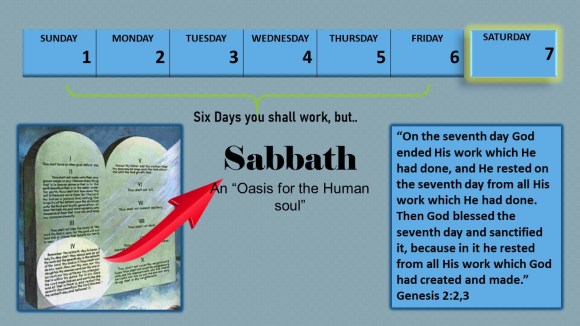
“Remember the Sabbath day, to keep it holy. Six days shalt thou labor, and do all thy work; but the seventh day is the Sabbath of the Lord thy God; in it thou shalt not do any work, thou, nor thy son, nor thy daughter, thy man-servant, nor thy maid-servant, nor thy cattle, nor thy stranger that is within thy gates; for in six days the Lord made heaven and earth, the sea, and all that in them is, and rested the seventh day; wherefore the Lord blessed the Sabbath day, and hallowed it.” Exodus 20:8-11. {1889 JNA, ESRS 3.2}

That this commandment requires men to remember and to keep holy the rest-day of the Creator, which he hallowed at the close of the first week of time, none can deny. We now ask for the authority for the change of this commandment. {1889 JNA, ESRS 4.1}

Papists believe that their church had power to change the fourth commandment; and, on that authority alone, they are perfectly satisfied in observing the first day of the week. {1889 JNA, ESRS 4.2}

Protestants deny the authority of the church or Rome and attempt to vindicate the change of the Sabbath by an appeal to the Bible. This is what we wish them to do. We ask them, therefore, to present a single text in which it is said that God has changed his Sabbath to the first day of the week. The advocates of the change have none to offer. If they cannot present such a text, will they give us one which testifies that God ever blessed and sanctified the first day of the week? Its observers admit that they have none to present. But will they not give us one text in which men are required to keep the first day holy, as a Sabbath unto the Lord? They acknowledge that they have none. How, then, do they dare to exalt the first day of the week above the Sabbath of the Lord, which the commandment requires us to remember, and keep holy? {1889 JNA, ESRS 4.3}

The Bible thoroughly furnishes the man of God unto all good works. Can Sunday-keeping be a very good work when the Bible has never said anything in its favor? Or, if it is a good work, can men be very thoroughly furnished in its defense when God has said nothing in its favor? Instead of being a good work, must it not be a fearful sin against God to thus pervert the fourth commandment, when once the mind has been enlightened on the subject? {1889 JNA, ESRS 4.4}

But there are several reasons urged for the observance of the first day of the week, which we will here notice. {1889 JNA, ESRS 5.1}

FIRST REASON. Redemption is greater than creation; therefore, we ought to keep the day of Christ’s resurrection, instead of the ancient Sabbath of the Lord. {1889 JNA, ESRS 5.2}

Where has God said this? Sunday-keepers are compelled to admit that he never did say it. What right, then, has any man to make such an assertion, and then to base the change of the Sabbath upon it? But suppose that redemption is greater than creation who knows that we ought to keep the first day of the week on that account? God never required men to keep any day as a memorial of redemption. But if it were a duty to observe one day of the week for this reason, most certainly the crucifixion day presents the strongest claims. It is not said that we have redemption through Christ’s resurrection; but it is said that we have redemption through the shedding of his blood. “And they sung a new song, saying, Thou art worthy to take the book, and to open the seals thereof; for thou wast slain, and hast redeemed us to God by thy blood, out of every kindred, and tongue, and people, and nation.” Revelation 5:9. “In whom we have redemption through his blood, the forgiveness of sins, according to the riches of his grace.” Ephesians 1:7; Colossians 1:14; Hebrews 9:12,15. {1889 JNA, ESRS 5.3}

Then redemption is through the death of the Lord Jesus; consequently, the day on which he shed his precious blood to redeem us, and said, “It is finished,” John 19:30, is the day that should be kept as a memorial of redemption, if any should be observed for that purpose. {1889 JNA, ESRS 6.1}

Nor can it be urged that the resurrection day is the most remarkable day in the history of redemption. It needs but a word to prove that, in this respect, it is far exceeded by the day of the crucifixion. Which is the more remarkable event, the act of Jehovah in giving his beloved and only Son to die for a race of rebels, or the act of the Father in raising that beloved Son from the dead? There is only one answer that can be given: It was not remarkable that God should raise his Son from the dead; but the act of the Father in giving his Son to die for sinners was a spectacle of redeeming love on which the universe might gaze and adore the wondrous love of God to all eternity. Who can wonder that the sun was vailed in darkness, and that all nature trembled at the sight! The crucifixion day, therefore, has far greater claims than the day of the resurrection. God has not enjoined the observance of either; and is it not a fearful act to make void the commandments of God by that wisdom which is folly in his sight? 1 Corinthians 1:19,20. {1889 JNA, ESRS 6.2}

But if we would commemorate redemption, there is no necessity of robbing the Lord’s rest-day of its holiness in order to do it. When truth takes from us our errors, it always has something better to take their place. So, the false memorial of redemption being taken out of the way, the word presents in its stead those which are true. God has provided us with memorials, bearing his own signature; and these we may observe with the blessing of Heaven. Would you commemorate the death of our Lord? You need not keep the day of his crucifixion. The Bible tells you how to do it. {1889 JNA, ESRS 7.1}

“For I have received of the Lord that which also I delivered unto you, That the Lord Jesus the same night in which he was betrayed took bread; and when he had given thanks, he brake it, and said, Take, eat; this is my body, which is broken for you; this do in remembrance of me. After the same manner also he took the cup, when he had supped, saying, This cup is the new testament in my blood: This do ye, as oft as ye drink it, in remembrance of me. For as often as ye eat this bread, and drink this cup, ye do show the Lord’s death till he come.” 1 Corinthians 11:23-26. {1889 JNA, ESRS 7.2}

Would you commemorate the burial and resurrection of the Saviour? You need not keep the first day of the week. The Lord ordained a very different and far more appropriate memorial. “Know ye not that so many of us as were baptized into Jesus Christ were baptized into his death? Therefore, we are buried with him by baptism into death; that like as Christ was raised up from the dead by the glory of the Father, even so we also should walk in newness of life. For if we have been planted together in the likeness of his death, we shall be also in the likeness of his resurrection.” Romans 6:3-5. “Buried with him in baptism, wherein also ye are risen with him through the faith of the operation of God, who hath raised him from the dead.” Colossians 2:12. {1889 JNA, ESRS 8.1}

It is true that the professed church has changed this ordinance to sprinkling, so that this divine memorial of the Lord’s resurrection is destroyed. And that they may add sin to sin, they lay hold of the Lord’s Sabbath and change it to the first day of the week, thus destroying the sacred memorial of the Creator’s rest, that they may have a memorial of Christ’s resurrection! “The earth also is defiled under the inhabitants thereof; because they have transgressed the laws, changed the ordinance, broken the everlasting covenant.” When will the professed church cease to pervert the right ways of the Lord? Not until the “inhabitants of the earth are burned, and few men left.” Isaiah 24:5,6. {1889 JNA, ESRS 8.2}

SECOND REASON. The disciples met on the day of our Lord’s resurrection to commemorate that event, and the Saviour sanctioned this meeting by uniting with them. John 20:19. {1889 JNA, ESRS 9.1}

If every word of this were truth, it would not prove that the Sabbath of the Lord has been changed. But to show the utter absurdity of this inference, listen to a few facts. The disciples did not then believe that their Lord had been raised from the dead but were assembled for the purpose of eating a common meal, and to seclude themselves from the Jews. The words of Mark and of John make this clear: “He appeared in another form unto two of them, as they walked, and went into the country. And they went and told it unto the residue; neither believed they them. Afterward he appeared unto the eleven as they sat at meat and upbraided them with their unbelief and hardness of heart, because they believed not them which had seen him after he was risen.” Mark 16:12-14. John says: “Then the same day at evening, being the first day of the week, when the doors were shut where the disciples were assembled for fear of the Jews, came Jesus and stood in the midst, and saith unto them, Peace be unto you.” John 20:19. {1889 JNA, ESRS 9.2}

It is a fact, therefore, that the disciples were not commemorating the resurrection of the Saviour; it is equally evident that they had not the slightest idea of a change of the Sabbath. At the burial of the Saviour, the women who had followed him to the tomb returned and prepared spices and ointments to embalm him; the Sabbath drew on; they rested the Sabbath day according to the commandment; and when the Sabbath was past, they came to the sepulcher upon the first day of the week to embalm their Lord. Luke 23:55,56; 24:1. They kept the Sabbath, according to the commandment, and resumed their labor on the first day of the week. {1889 JNA, ESRS 9.3}

We looked at the first two reasons. Part two in the next 2 weeks, we will look at reasons three through seven.

Categories
Bible Truths

Iniquity Abounds

Having contemplated the days of Noah, we must ask, how did things get so bad?  Not desiring to retain God in their knowledge, the inhabitants of the earth before the flood soon came to deny His existence. “They adored nature in place of the God of nature. They glorified human genius, worshiped the works of their own hands, and taught their children to bow down to graven images”. {Patriarchs and Prophets (PP) 90.3} 

“Men put God out of their knowledge and worshiped the creatures of their own imagination; and as the result, they became more and more debased. The psalmist describes the effect produced upon the worshiper by the adoration of idols. He says, “They that make them are like unto them; so is every one that trusteth in them.” Psalms 115:8. It is a law of the human mind that by beholding we become changed. Man will rise no higher than his conceptions of truth, purity, and holiness. If the mind is never exalted above the level of humanity, if it is not uplifted by faith to contemplate infinite wisdom and love, the man will be constantly sinking lower and lower. The worshipers of false gods clothed their deities with human attributes and passions, and thus their standard of character was degraded to the likeness of sinful humanity. They were defiled in consequence. “God saw that the wickedness of man was great in the earth, and that every imagination of the thoughts of his heart was only evil continually. . . . The earth also was corrupt before God; and the earth was filled with violence.” God had given men His commandments as a rule of life, but His law was transgressed, and every conceivable sin was the result. The wickedness of men was open and daring, justice was trampled in the dust, and the cries of the oppressed reached unto heaven.  {PP 91.2}

     Polygamy had been early introduced, contrary to the divine arrangement at the beginning. The Lord gave to Adam one wife, showing His order in that respect. But after the Fall, men chose to follow their own sinful desires; and as the result, crime and wretchedness rapidly increased. Neither the marriage relation nor the rights of property were respected. Whoever coveted the wives or the possessions of his neighbor, took them by force, and men exulted in their deeds of violence. They delighted in destroying the life of animals; and the use of flesh for food rendered them still more cruel and bloodthirsty, until they came to regard human life with astonishing indifference”.  {PP 91.3}

As we were preparing this article, news came that a young man drove over two hours to a Buffalo store and mercilessly gunned down thirteen people with ten dying on the spot.  According to a report, it seemed like it was a random act of violence.  But is it?   “The thing that hath been, it [is that] which shall be; and that which is done [is] that which shall be done: and [there is] no new [thing] under the sun. Is there [any] thing whereof it may be said, See, this [is] new? it hath been already of old time, which was before us. (Ecclesiastes 1:9-10[KJV])

As it was in the world before the Flood, iniquity will prevail. Following the promptings of their corrupt hearts and the teachings of a deceptive philosophy, men will rebel against authority in earth and in Heaven.    

Hast thou marked the old way which wicked men have trodden? Which were cut down out of time, whose foundation was overflown with a flood: Which said unto God, Depart from us: and what can the Almighty do for them? Yet he filled their houses with good [things]: but the counsel of the wicked is far from me. (Job 22:15-18 [KJV])

They spend their days in wealth, and in a moment go down to the grave. Therefore they say unto God, Depart from us; for we desire not the knowledge of thy ways.  What [is] the Almighty, that we should serve him? and what profit should we have, if we pray unto him? (Job 21:13-15 [KJV])

This is the philosophy that brought the world to its breaking point.  The same philosophy now permeates this world.  Martin Luther saw and understood that danger and gave warning, but to no avail.  Here is Luther. “He wrote thus of the universities: “I fear much that the universities will be found to be great gates leading down to hell, unless they take diligent care to explain the Holy Scriptures, and to engrave them in the hearts of our youth. I advise no one to place his child where the Holy Scriptures are not regarded as the rule of life. Every institution where the Word of God is not diligently studied, must become corrupt.”  {Great Controversy 1888 140.4}

PAGANISM SELF-WORSHIP

Here, Sutherland described what develops when man turns from God.

“As to paganism and its system of education, what was the religion of the pagan world? and what were the ideas it strove to propagate?

 First, it placed above God the study and worship of self. Christ is the “true light that lighteth every man that cometh into the world.”

All men have, then, at some time in life, light enough to lead them to truth, for the gospel “reveals a divine anger from heaven upon all wickedness and iniquity of men who pervert the true into the false; because the knowledge of God is clear within themselves, God having revealed it to them; for from the creation of the world His invisible attributes might be discovered from the created facts, — that is, His unseen power and Godhead.

 Consequently, they are inexcusable.”  Men, therefore, who of necessity have light may reject that light, and they then become pagan.

Paul, in the first chapter of his Roman letter, states a universal law, in that when truth is rejected, error takes its place. The quotation is again taken from Fenton’s translation, because the wording, by differing slightly from the authorized version, stimulates thought:  “Because, knowing God, they did not honor Him as a God, or rejoice, but trifled in their augmentations, and darkened their senseless hearts; professing to be philosophers, they played the fool, and transformed the glory of the imperishable God into an image of perishable man, and birds! and beasts! and reptiles! And, therefore, God abandoned them in the lusts of their hearts to filthiness, to dishonor their own bodies to themselves; they having changed the truth of God into falsehood, by honoring and serving the creature contrary to the Creator, who is truly blessed in all ages.”⁴ Having turned from the worship of Jehovah to the worship of man, then bird, and beast, and reptile, we find associated with worship the grossest forms of licentiousness.

This is stated by Paul in the first chapter of Romans. The thought which must be borne in mind is that man turns from God and worships himself. He can conceive of no power higher than his own mind, no form more lofty than his own. His first idol is the human form, male or female. He endows this with human passions, for he knows no heart but his own. By beholding he becomes changed into the same passionate creature; a beast becomes the personification of his deity, and the sacred bull his god. Everything about the worship is gross, and birds, crocodiles, and all sorts of reptiles become objects of worship.  This PROGRESSES TOWARD SELF WORSHIP  Romans 1:18-20, Fenton’s translation.

Living Fountains or Broken Cisterns is Egypt. This, in fact, pictures the final worship in any country which turns from Christ and places faith in man. Pages 94-96.

We are here and repeating the sad history.

Categories
Bible Truths

DAYS OF NOAH

In the book of Luke, Christ referenced the days of Noah as a sign of the last days.  “And as it was in the days of Noe, so shall it be also in the days of the Son of man”. (Luke 17:26 [KJV]).    What were the characteristics of those days?  Genesis 6 and verse 5 states; “ And GOD saw that the wickedness of man [was] great in the earth, and [that] every imagination of the thoughts of his heart [was] only evil continually”.   “And God looked upon the earth, and, behold, it was corrupt; for all flesh had corrupted his way upon the earth. The earth also was corrupt before God, and the earth was filled with violence”. (Genesis 6:11-12 [KJV])

God had given men His commandments as a rule of life, but His law was transgressed, and every conceivable sin was the result. The wickedness of men was open and daring, justice was trampled in the dust, and the cries of the oppressed reached unto heaven. 
{Patriarchs and Prophets (PP) 91.2}

Polygamy had been early introduced, contrary to the divine arrangement at the beginning. The Lord gave to Adam one wife, showing His order in that respect. But after the Fall, men chose to follow their own sinful desires; and as the result, crime and wretchedness rapidly increased. Neither the marriage relation nor the rights of property were respected. Whoever coveted the wives or the possessions of his neighbor, took them by force, and men exulted in their deeds of violence. They delighted in destroying the life of animals; and the use of flesh for food rendered them still more cruel and bloodthirsty, until they came to regard human life with astonishing indifference. 
{PP 91.3} 

It is a law of the human mind that by beholding we become changed. Man will rise no higher than his conceptions of truth, purity, and holiness. If the mind is never exalted above the level of humanity, if it is not uplifted by faith to contemplate infinite wisdom and love, the man will be constantly sinking lower and lower. The worshipers of false gods clothed their deities with human attributes and passions, and thus their standard of character was degraded to the likeness of sinful humanity.

Such was the state of the world then.  In the book of Job the thoughts of the Antediluvian is clearly expressed. 

Hast thou marked the old way which wicked men have trodden?  Which were cut down out of time, whose foundation was overflown with a flood:

Which said unto God, Depart from us: and what can the Almighty do for them?  Yet he filled their houses with good [things]: but the counsel of the wicked is far from me”. (Job 22:15-18 [KJV])

“They spend their days in wealth, and in a moment go down to the grave.  Therefore they say unto God, Depart from us; for we desire not the knowledge of thy ways. What [is] the Almighty, that we should serve him? and what profit should we have, if we pray unto him”? (Job 21:13-15 [KJV])

Since Christ referenced this, it should be clear that wickedness will increase until most of humanity will be totally absorbed in profound wickedness. God will be totally left out of the thoughts.  While this may seem unlikely, the word of God states what is already fact with the outworking to follow.

Because that, when they knew God, they glorified [him] not as God, neither were thankful; but became vain in their imaginations, and their foolish heart was darkened.

Professing themselves to be wise, they became fools,  And changed the glory of the uncorruptible God into an image made like to corruptible man, and to birds, and fourfooted beasts, and creeping things.  Wherefore God also gave them up to uncleanness through the lusts of their own hearts, to dishonour their own bodies between themselves:  Who changed the truth of God into a lie, and worshipped and served the creature more than the Creator, who is blessed forever. Amen.  For this cause God gave them up unto vile affections: for even their women did change the natural use into that which is against nature:

And likewise also the men, leaving the natural use of the woman, burned in their lust one toward another; men with men working that which is unseemly, and receiving in themselves that recompence of their error which was meet.  And even as they did not like to retain God in [their] knowledge, God gave them over to a reprobate mind, to do those things which are not convenient;  Being filled with all unrighteousness, fornication, wickedness, covetousness, maliciousness; full of envy, murder, debate, deceit, malignity; whisperers, Backbiters, haters of God, despiteful, proud, boasters, inventors of evil things, disobedient to parents, without understanding, covenant breakers, without natural affection, implacable, unmerciful”. (Romans 1:21-31[KJV])

What levels of degeneracy will the people of the world reach as they choose to leave God out of their daily life. 

The Apostle continues; 

“This know also, that in the last days perilous times shall come.  For men shall be lovers of their own selves, covetous, boasters, proud, blasphemers, disobedient to parents, unthankful, unholy, Without natural affection, trucebreakers, false accusers, incontinent, fierce, despisers of those that are good, Traitors, heady, high minded, lovers of pleasures more than lovers of God; Having a form of godliness, but denying the power thereof: from such turn away”. (2 Timothy 3:1-5 [KJV])

Yea, and all that will live godly in Christ Jesus shall suffer persecution. But evil men and seducers shall wax worse and worse, deceiving, and being deceived. (2 Timothy 3:12-13 [KJV])

It was not multitudes or majorities that were on the side of right. The world was arrayed against God’s justice and His laws, and Noah was regarded as a fanatic and a “conspiracy theorist”. Satan, when tempting Eve to disobey God, said to her, “Ye shall not surely die.” Genesis 3:4. Great men, worldly, honored, and wise men, repeated the same. “The threatenings of God,” they said, “are for the purpose of intimidating, and will never be verified. You need not be alarmed. Such an event as the destruction of the world by the God who made it, and the punishment of the beings He has created, will never take place. Be at peace; fear not. Noah is a wild fanatic.” The world made merry at the folly of the deluded old man. Instead of humbling the heart before God, they continued their disobedience and wickedness, the same as though God had not spoken to them through His servant.  {PP 96.1} 

     But Noah stood like a rock amid the tempest. Surrounded by popular contempt and ridicule, he distinguished himself by his holy integrity and unwavering faithfulness. A power attended his words, for it was the voice of God to man through His servant. Connection with God made him strong in the strength of infinite power, while for one hundred and twenty years his solemn voice fell upon the ears of that generation in regard to events, which, so far as human wisdom could judge, were impossible. 
{PP 96.2} 

     The world before the Flood reasoned that for centuries the laws of nature had been fixed. The recurring seasons had come in their order. Heretofore rain had never fallen; the earth had been watered by a mist or dew. The rivers had never yet passed their boundaries, but had borne their waters safely to the sea. Fixed decrees had kept the waters from overflowing their banks. But these reasoners did not recognize the hand of Him who had stayed the waters, saying, “Hitherto shalt thou come, but no further.”
Job 38:11.  {PP 96.3} 

Knowing this first, that there shall come in the last days scoffers, walking after their own lusts, And saying, Where is the promise of his coming? for since the fathers fell asleep, all things continue as [they were] from the beginning of the creation.  For this they willingly are ignorant of, that by the word of God the heavens were of old, and the earth standing out of the water and in the water:  Whereby the world that then was, being overflowed with water, perished:

But the heavens and the earth, which are now, by the same word are kept in store, reserved unto fire against the day of judgment and perdition of ungodly men”. (2 Peter 3:3-7 [KJV])

These words speak clearly to us all.  The future has been declared.  What will be your choice?

“Therefore we ought to give the more earnest heed to the things which we have heard, lest at any time we should let [them] slip. For if the word spoken by angels was stedfast, and every transgression and disobedience received a just recompence of reward;  How shall we escape, if we neglect so great salvation; which at the first began to be spoken by the Lord, and was confirmed unto us by them that heard [him]; God also bearing [them] witness, both with signs and wonders, and with divers miracles, and gifts of the Holy Ghost, according to his own will”? (Hebrews 2:1-4 [KJV])

Categories
Bible Truths

TOMORROW

When God made man, he made him that he might enter into and enjoy God’s rest, eternal rest. However, this could only be done by man making a personal choice. Therefore, God placed him on a season of probation, and in this probationary time God prepared for and gave to man the Sabbath of rest. This was the very beginning of eternal rest. This probationary time afforded the man the opportunity to choose and enjoy God’s rest.  In that he failed, the world plunged into unrest. When the mind cannot discern the future, worry normally begins and peace of mind is broken.

When God’s rest was prepared for man at the foundation of the world, it was established in the seventh-day Sabbath. For the seventh day is the Sabbath, the rest of the Lord thy God, and the Sabbath was made for man. (Genesis 2:1-3; Exodus 16:22-23; Mark 2:27-28) 

The seventh day therefore, being the Sabbath, which is God’s rest, and which  was made for man at the foundation of the world, remained the only avenue to find rest

Scripture makes this clear, for, speaking of Israel, God said: “I have sworn in my wrath, they shall not enter into my rest: although the works were finished from the foundation of the world. For he spake in a certain place of the seventh day on this wise, And God did rest the seventh day from all his works. And in this place again, they shall not enter into my rest.” (Hebrews 4:3-5)

That is to say, the works were finished from the foundation of the world. When the works were finished, the rest was prepared; for then “God did rest. . . from all his works.” This rest was prepared in the seventh day; for “God did rest the seventh day from all his works.” But through unbelief the man failed to enter into God’s rest. He did not abide in God’s work, and so he could not enter into God’s rest. Therefore, unbelief brings unrest.

Nothing unsettles the mind of man more than the uncertainty of tomorrow. Nearly all decisions that are made, are made in light of what may happen tomorrow.

The present war in Ukraine is about tomorrow.  While Putin may not see NATO as a present threat, his worry is about the future; hence, he is trying to have tomorrow’s reality today. 
The Lord Jesus Christ addresses this problem in Matthew chapter six.Take therefore no thought for the morrow: for the morrow shall take thought for the things of itself. Sufficient unto the day [is] the evil thereof.
(Matthew 6:34 [KJV])

Like Putin, many of the failures of God’s people concern tomorrow.

Worry is blind, and cannot discern the future; but Jesus sees the end from the beginning. In every difficulty He has His way prepared to bring relief. Our heavenly Father has a thousand ways to provide for us, of which we know nothing. Those who accept the one principle of making the service and honor of God supreme will find perplexities vanish, and a plain path before their feet.  {Desire of Ages (DA) 330.1

If you have given yourself to God, to do His work, you have no need to be anxious for tomorrow. He whose servant you are, knows the end from the beginning. The events of tomorrow, which are hidden from your view, are open to the eyes of Him who is omnipotent.  {Thoughts from the Mount of Blessing (MB) 100.1} 

Christ has given us no promise of help in bearing today the burdens of tomorrow. He has said, “My grace is sufficient for thee” (2 Corinthians 12:9); but, like the manna given in the wilderness, His grace is bestowed daily, for the day’s need. Like the hosts of Israel in their pilgrim life, we may find morning by morning the bread of heaven for the day’s supply.  {MB 101.1} 
One day alone is ours, and during this day we are to live for God.

 Genesis fifteen showed Abraham’s mind after returning from the battle. “Abraham gladly returned to his tents and his flocks, but his mind was disturbed by harassing thoughts. He had been a man of peace, so far as possible shunning enmity and strife; and with horror he recalled the scene of carnage he had witnessed. But the nations whose forces he had defeated would doubtless renew the invasion of Canaan, and make him the special object of their vengeance. Becoming thus involved in national quarrels, the peaceful quiet of his life would be broken. Furthermore, he had not entered upon the possession of Canaan, nor could he now hope for an heir, to whom the promise might be fulfilled. {Patriarchs and Prophets (PP) 136.2} 
“In a vision of the night the divine Voice was again heard. “Fear not, Abram,” were the words of the Prince of princes; “I am thy shield, and thy exceeding great reward.” {PP 136.3} His fear for the future caused him to not fully grasp the promise until many years later.

Exodus sixteen shows the same fore-boding. “From Marah the people journeyed to Elim, where they found “twelve wells of water, and threescore and ten palm trees.” Here they remained several days before entering the wilderness of Sin. When they had been a month absent from Egypt, they made their first encampment in the wilderness. Their store of provisions had now begun to fail. There was scanty herbage in the wilderness, and their flocks were diminishing. How was food to be supplied for these vast multitudes? Doubts filled their hearts, and again they murmured. Even the rulers and elders of the people joined in complaining against the leaders of God’s appointment: “Would to God we had died by the hand of the Lord in the land of Egypt, when we sat by the fleshpots, and when we did eat bread to the full; for ye have brought us forth into this wilderness, to kill this whole assembly with hunger.”  {PP 292.1} 

They had not as yet suffered from hunger; their present wants were supplied, but they feared for the future. They could not understand how these vast multitudes were to subsist in their travels through the wilderness, and in imagination they saw their children famishing.”  

In 1 Kings 19 we read,
1 “And Ahab told Jezebel all that Elijah had done, and withal how he had slain all the prophets with the sword. 2 Then Jezebel sent a messenger unto Elijah, saying, So let the gods do [to me], and more also, if I make not thy life as the life of one of them by tomorrow about this time. 3 And when he saw [that], he arose, and went for his life, and came to Beersheba, which [belongeth] to Judah, and left his servant there.”

God has wrought wonderful works by Elijah, but instead of standing in his lot that day he succumbed to the threat of tomorrow, therefore, he no longer had rest.
One of the greatest blunders seen in the life of God’s people is the experience of David recorded in 1 Samuel 27.
“And David said in his heart, I shall now perish one day by the hand of Saul: [there is] nothing better for me than that I should speedily escape into the land of the Philistines; and Saul shall despair of me, to seek me any more in any coast of Israel: so shall I escape out of his hand.” (1 Samuel 27:1 [KJV])

God had repeatedly protected David from Saul’s malice.  After a wonderful victory over Saul (see 1 Samuel 26), David had no reason to come to this conclusion.  He was already anointed king and no power on earth could prevent him from being king. Yet in looking at tomorrow, he fell today.  So will everyone who is inclined to carry tomorrow’s burden today.   

Today we have a world that is troubled, Christ prophesied that “Men’s hearts failing them for fear, and for looking after those things which are coming on the earth: for the powers of heaven shall be shaken. “(Luke 21:26 [KJV])

Unrest will be everywhere.  Where then can rest be found?  It will be found where it has always been.
Israel failed to enter into God’s rest, that rest did not fail: it still remains, and waits for men to enter it. Though Israel and the world failed to discern in the seventh day God’s rest, and so missed it, that rest, that Sabbath, of the seventh day did not vanish away; it still, even today, “remaineth,” and waits for man to enter into it. For “seeing. . . that some must enter therein, and they to whom it was first preached entered not in because of unbelief; again, he limiteth a certain day, saying in David, Today, after so long a time; . . . today if ye will hear his voice, harden not your hearts.” “There remaineth therefore a rest to the people of God;” (Hebrews 4:5-7 &9)

Will your tomorrow eclipse the rest of today?